
Belizean Students Turn New River into Real-World Science Lab
Tonight, on The Bright Side, a classroom is stretching far beyond four walls in Orange Walk. At New Hope High School, first form students have turned a nearby river into a living, breathing science lab, and their work is being recognized beyond Belize. Through hands-on research, they’ve been collecting real data all year long, and now their findings are part of an international database. The effort is earning the school recognition from the Ministry of Education’s MoRE Campaign, proving that curiosity and commitment can flow a long way. News Five’s Sabreena Daly takes us there.
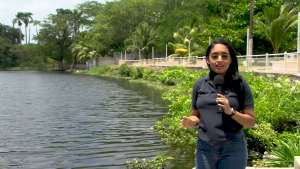
Sabreena Daly
Sabreena Daly, Reporting
For years, the New River has been the lifeblood of Orange Walk, but today, it’s also a classroom without walls for New Hope High School.
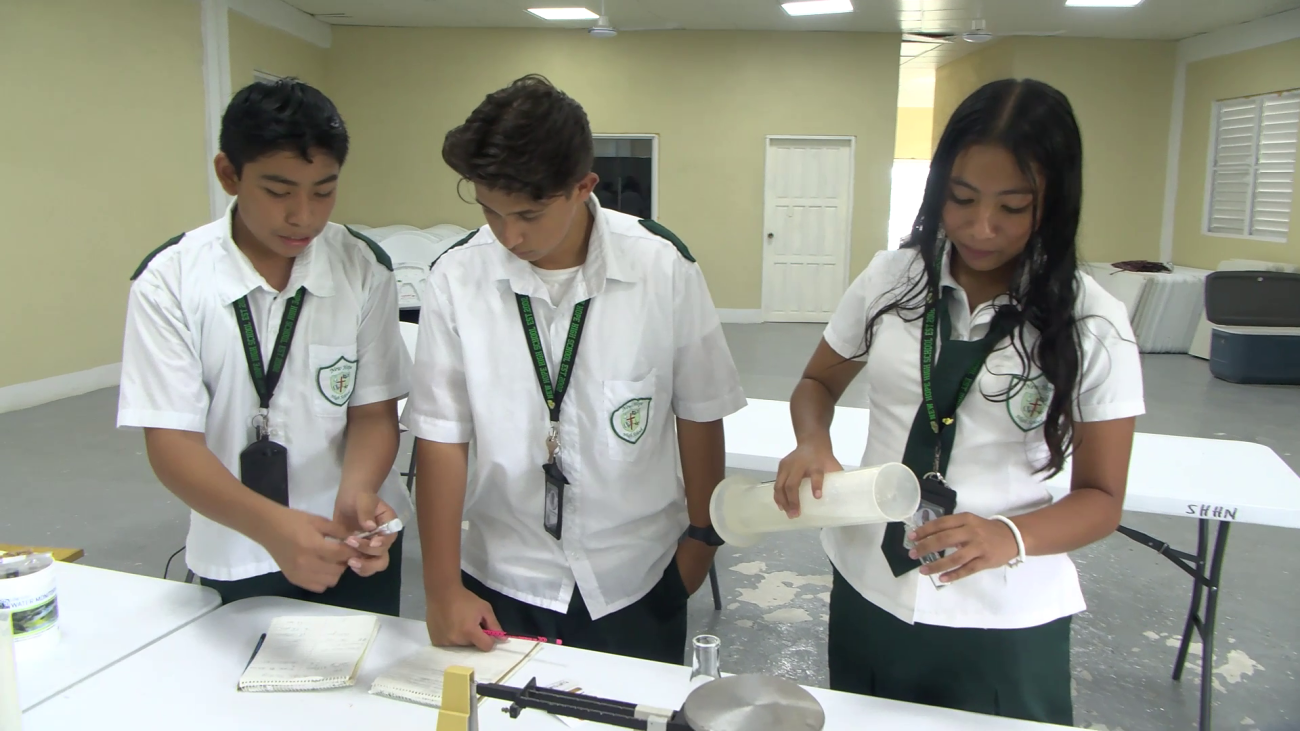
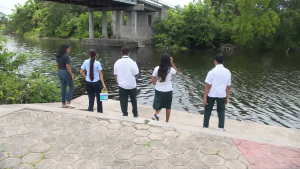
It started with a class lesson and an opportunity to go the extra mile. New Hope High School’s first formers picked up GLOBE, a NASA-affiliated science platform promoted through the Ministry of Education and used it to monitor the New River for nine months, collecting real data and feeding it into a global database researchers actually use.
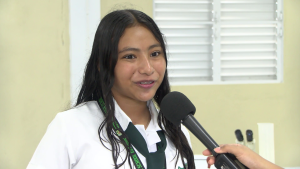
Sophie Novelo
Sophie Novelo, Student, New Hope High School
“Before I felt like it’s just for a grade. I’ll just do it for fun and so forth. But now knowing that this has gone so big that we went to present it and so forth, it got me really excited.”
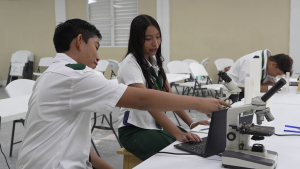 Sophie is one of three students who pushed this project even further, but her story isn’t the exception, it’s the example. Dozens of first form students at New Hope High School got the same hands-on experience, stepping out of the classroom and into real-world science. Leading the way is their teacher, Zury Magana, who’s turning curiosity into action and showing her students just how far learning can go.
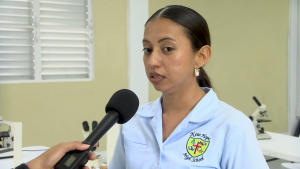
Zury Magana
Zury Magana, Teacher, New Hope High School
“So research like this is important because it gets the exposure to my students. They’re not only tackling problems that affect our community, but also if we don’t do anything about it, in the longer run, it will affect the entire country of Belize.”
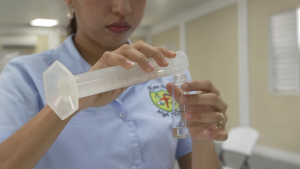 With support from the Peace Corps, through a specialist in STEAM education, Magana gained skills in science, tech, and hands-on data collection. That’s how Dylan Guerrero was able to understand the health of New River.
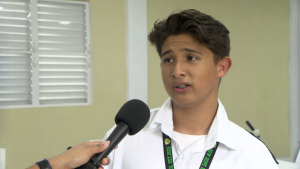
Dylan Guerrero
Dylan Guerrero, Student, New Hope High School
“ As you could see in some pictures, you can’t see through the water. That, which is to show transparency, was overall very poor. And then the dissolved oxygen, when we tested it, for the most part, we got poor results, which shows that the fish or any other animals in it would struggle to breathe, which is a big issue ’cause animals need to eat fish, and we need to eat other animals too.”
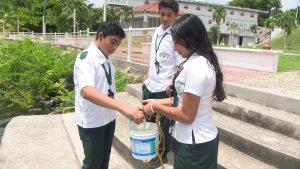 The school’s findings line up with what’s already known. The Department of Environment, along with PHYCORE, a biotech group working with students from Columbia University, is spearheading ongoing efforts to restore the New River. And the students didn’t just collect data on the problem; they went to see the solutions in person.
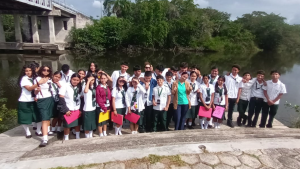 Zury Magana
“One of them was to do a visitation at the Phycore for bio-remediation to see actual solutions that are being done for the New River. And we also did an excursion at the Calabash Cay, where 16 students got to do that experience to see how everything that is done here in the mainland will end up in the Caribbean Sea.”
But the work kept going. Students didn’t just share their findings in Belmopan with the Peace Corps; they also brought their research straight to the Orange Walk Town Council. And all of it, part of something bigger, an international database, on the same GLOBE platform the ministry first introduced them to. That’s the kind of outcome that caught the ministry’s attention and that was doing “MoRe”.
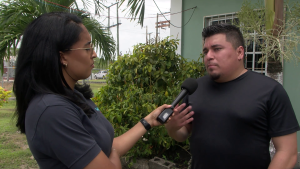
Carlos Quiroz
Carlos Quiroz, 501 Coordinator, MOESCT
“We encourage that because for us, that is what education and doing more is all about. It’s about going beyond just doing work for grades. It’s taking it into your community. It’s action in your community. So that’s why when it relates to doing more, we were happy to see that they decided to pick a topic that is very near and dear to their community and to try and find an understanding of the issue.”
 And that’s exactly what it looked like at New Hope. Eleazar Novelo didn’t just submit an assignment; he stood in front of the Orange Walk Town Council and made his case.
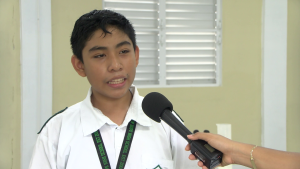
Eleazar Novelo
Eleazar Novelo, Student, New Hope High School
“So I presented our data, our hypothesis, what we thought, why it happened. We thought the New River wouldn’t be safe, but in the end it was not perfect, but it was okay. The town council expressed that they would help and had a good attitude.”
A class assignment turned into real science, with real stakes, and a real seat at the table. And it all started with a bucket, a stretch of river they pass every day and students wanting more. Looking on the Bright Side, I’m Sabreena Daly.
Attention readers: This online newscast is a direct transcript of our evening television broadcast. When speakers use Kriol, we have carefully rendered their words using a standard spelling system.
Watch the full newscast here: