


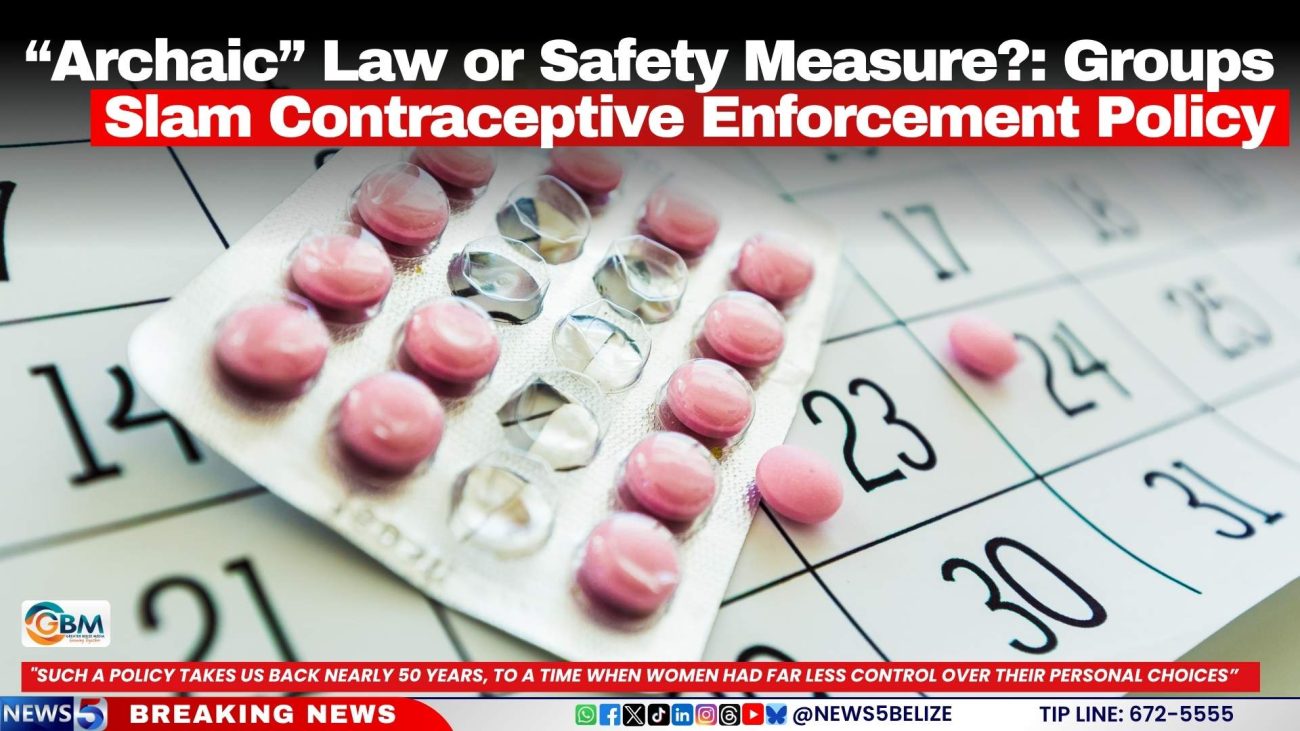
“Archaic” Law or Safety Measure?: Groups Slam Contraceptive Enforcement Policy
Advocacy groups and labour leaders challenged the Ministry of Health and Wellness’s enforcement policy over access to contraceptives.
Just before the MOHW’s press briefing on Monday, the Promoting Empowerment Through Awareness for Lesbian and Bisexual Women (PETAL) warned the requirement for prescriptions could create new barriers for women.
PETAL said the move “raises serious concerns about women’s autonomy, equitable access to healthcare, and the socio-economic realities facing women and girls in Belize”.
The National Trade Union Congress of Belize (NTUCB) also rejected the proposal, calling the regulation an “archaic legislation” that needs to be “immediately revised.”
Both groups argued that consultation fees, transportation, and time away from work would disproportionately affect rural and low-income women. The groups warned that the policy could lead to increased unintended pregnancies, deepen inequality, and strain an already stretched public health system.
“Such a policy takes us back nearly 50 years, to a time when women had far less control over their personal choices,” NTUCB added. “On the heels of a month spent championing women’s rights and progress, this move is a step backward we cannot accept!”
During Monday’s press briefing, Dr Melissa Diaz-Musa, the Director of Public Health and Wellness, addressed these concerns. She said that the country already operates a layered system of access, which includes well-equipped primary care facilities located in every district. Many of these facilities are open seven days a week and have nurses who are trained and authorised to dispense prescription medications, including contraceptives.
Dr Diaz-Musa added that Belize has also expanded mobile clinics into smaller villages staffed by “doctors, nurses, pharmacists, and other allied health workers as needed.”
On prescriptions, Dr Diaz-Musa stressed that repeat access is already routine within the system. “This has been happening for years. Many women collect three, six, or even 12 monthly prescriptions regularly,” she said.
Dr Diaz-Musa argued that the current debate reflects confusion about how the system works in practice and on regulations that are not new.
MOHW proposed a 12-month phase-in to give time for public education and discussions with pharmacists and other stakeholders.