


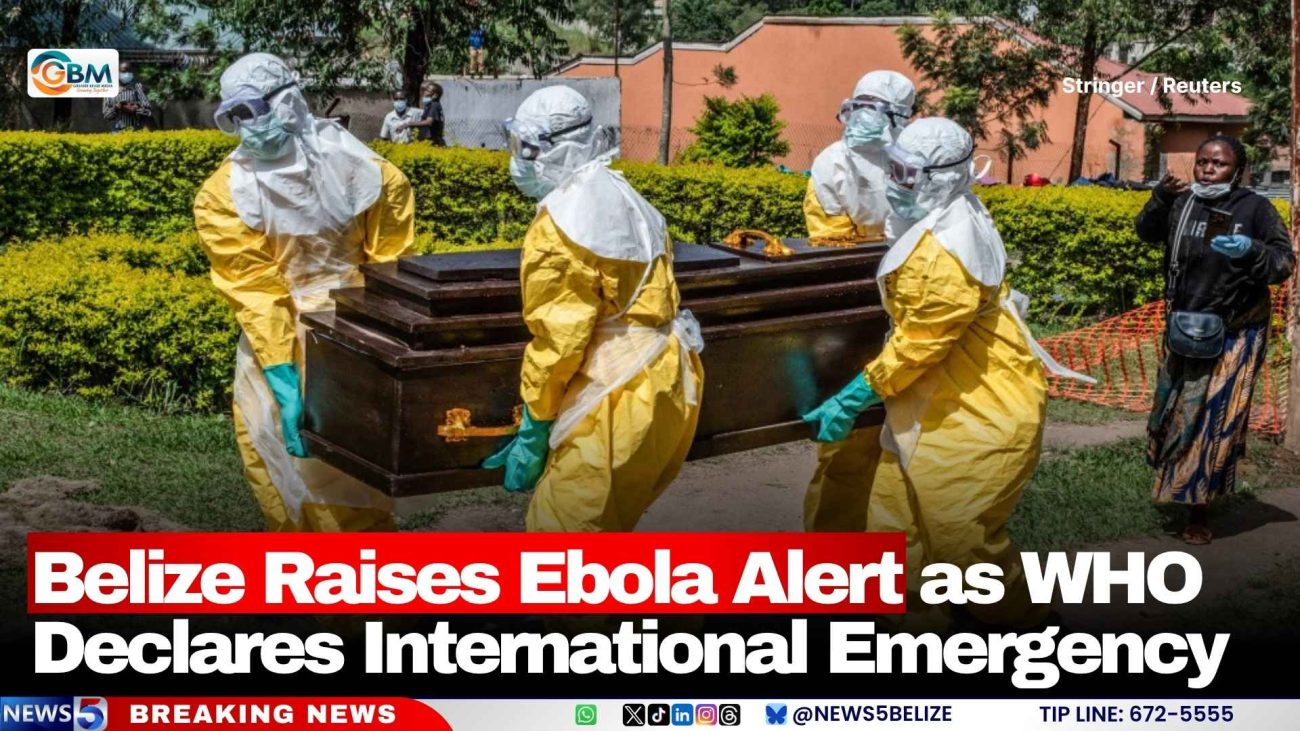
Belize Raises Ebola Alert as WHO Declares International Emergency
The Ministry of Health and Wellness (MOHW) issued an urgent public advisory Thursday, placing Belize on heightened Ebola vigilance as the World Health Organization (WHO) has declared the ongoing outbreak in the Democratic Republic of the Congo (DRC) and Uganda a Public Health Emergency of International Concern (PHEIC). While no suspected cases have been identified in Belize, authorities are ramping up screening at all ports of entry.
The outbreak, caused by the rare Bundibugyo strain of the Ebola virus, for which no approved vaccine or specific treatment currently exists, was confirmed by Congolese health authorities on May 15, 2026. By May 19, the case count had climbed to more than 500 suspected cases and 130 suspected deaths. On May 17, WHO Director-General Tedros Adhanom Ghebreyesus formally declared the situation a PHEIC, the highest alarm level under the International Health Regulations, though stopping short of calling it a pandemic emergency. Uganda subsequently closed its border with DRC in response to the cross-border spread.
The MOHW advisory stressed that the current risk to the Belizean public remains low but that proactive measures are necessary. The Ministry is coordinating with the Belize Airport Authority, border management agencies, immigration, customs, civil aviation, cruise lines, and airline partners to strengthen screening and response procedures at airports, land borders, and seaports.
Travelers are being urged to provide accurate recent travel history to border officials. Those returning from affected areas are encouraged to self-isolate as a precautionary measure. Anyone who has traveled from the affected regions and develops symptoms should immediately contact the MOHW helpline at 0-800-MOH-CARE and avoid close contact with others while seeking medical attention.
Ebola is a rare but often fatal viral disease spread through direct contact with the blood or body fluids of a person who is sick with or has died from the disease. The incubation period ranges from 2 to 21 days. Early symptoms include fever, severe fatigue, muscle pain, headache, and sore throat, followed by vomiting, diarrhea, abdominal pain, unexplained bleeding, and rash. The Bundibugyo strain has historically carried a case fatality rate of between 30% and 50%.