


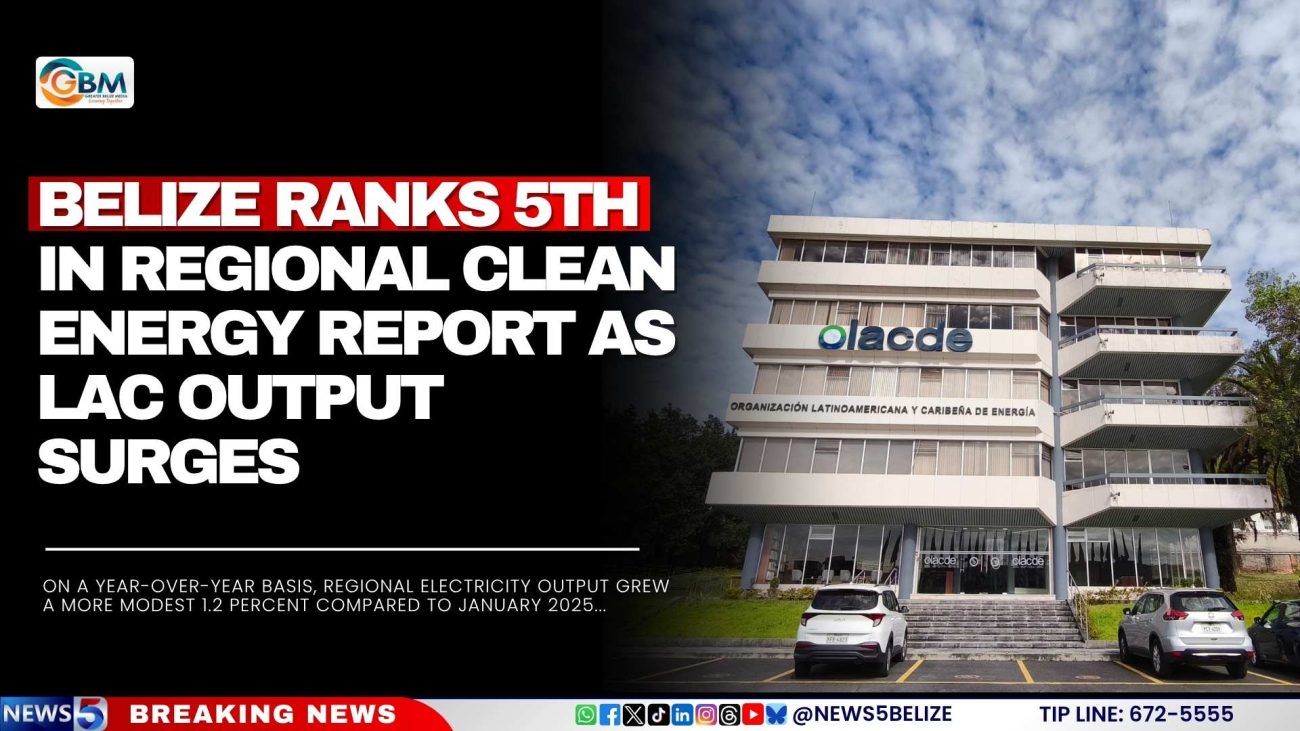
Belize Ranks 5th in Regional Clean Energy Report as LAC Output Surges
Belize generated more than nine-tenths of its electricity from renewable sources in January, placing it among the top performers in a region-wide energy report.
Latin America and the Caribbean produced 171 terawatt-hours (TWh) of electricity in January 2026, a 9.6 percent increase over the previous month, driven largely by a recovery in hydropower output following an easing of hydrological constraints across regional power systems, according to the Latin American and Caribbean Energy Organization (OLACDE).
Belize ranked fifth in the region for renewable energy share, with 90.9 percent of its electricity generation coming from renewable sources. Only Paraguay (100%), Costa Rica (97.8%), Uruguay (96.5%), and Ecuador (91.6%) ranked higher. Colombia, Brazil, and Venezuela also featured in the top tier.
Across the region, renewables accounted for 66 percent of the total energy mix, with hydropower alone making up 44.5 percent of regional generation. Natural gas remained the dominant fossil fuel source at 23.8 percent, serving primarily as a flexible backup resource for grids with high penetration of variable renewables.
The report also flagged seasonal weaknesses in certain renewable technologies. Solar generation fell 30 percent compared to December 2025, geothermal dropped 36 percent, and wind declined 11 percent — trends OLACDE analysts said underscore the need for dispatchable technologies capable of stabilising grid intermittency.
On a year-over-year basis, regional electricity output grew a more modest 1.2 percent compared to January 2025, with hydropower contributing an additional 10.8 TWh while solar generation reduced overall output by 11.2 TWh.