


Belize Tackles One of Hurricanes’ Deadliest Threats
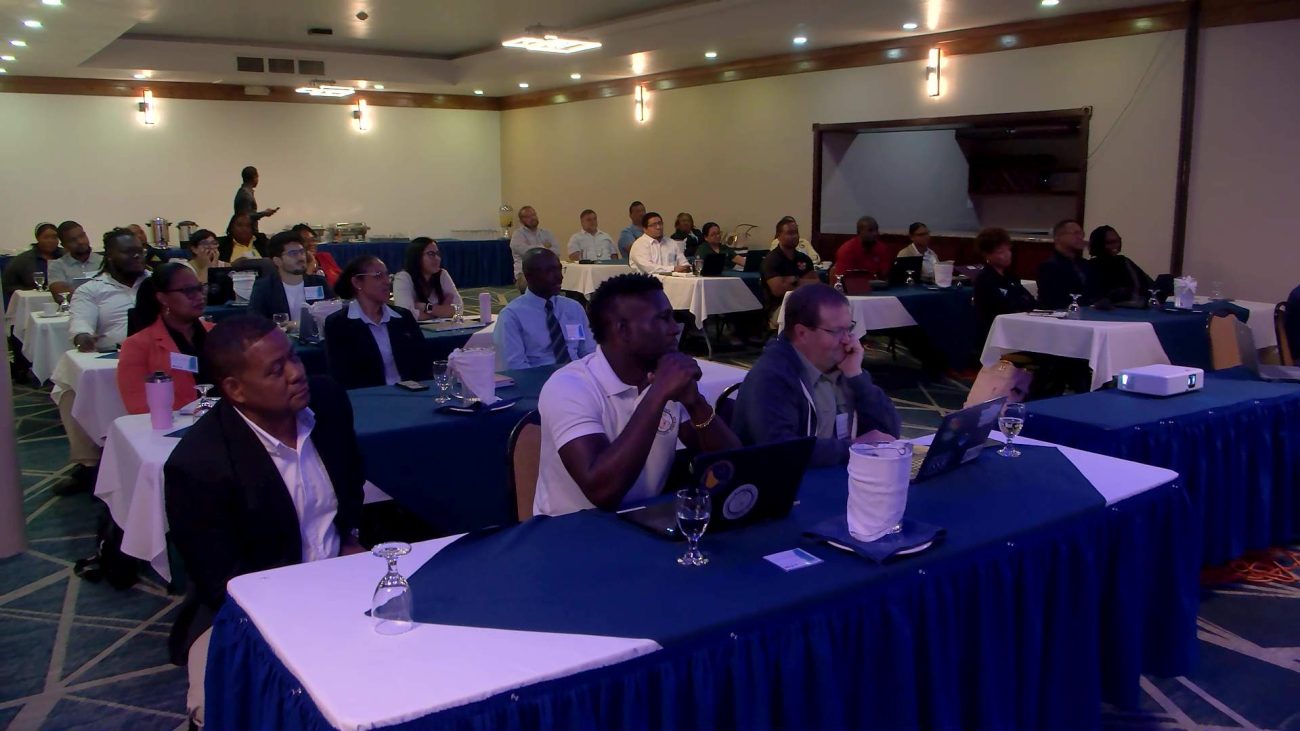
As hurricane season edges closer, one of the most dangerous threats facing coastal communities, storm surge, is taking center stage in Belize. This week, the country is hosting a high level workshop that brings together meteorologists, disaster managers, and international experts. They’re all focused on one urgent goal: getting warnings right and getting them out faster. Over the next three days, participants will dive into improved forecasting tools and early warning systems, with support from the U.S. National Hurricane Center, the University Corporation for Atmospheric Research, and other global partners. Organizers say stronger science and clearer communication could mean the difference between life and death when the next major storm hits. Here’s Shane Williams with the following story.
 Shane Williams Reporting…
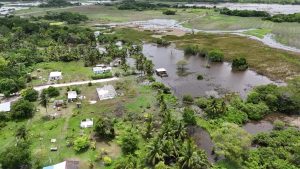
Many of us have heard stories that have morphed into epics about Hurricane Hattie’s storm surge experiences along the coast of Belize City. The power of the sea can be devastating and for low-lying countries like Belize, storm surge remains one of the greatest risks during hurricane season. This week that threat is taking center stage as international experts gather in Belize for a storm surge workshop led by the U.S. based National Hurricane Center.
Ronald Gordon
Ronald Gordon, Chief Meteorologist
“It started about over ten years ago, and because of the fact that we are a country that is very vulnerable to storm surge, we were one of the first countries in the region to have been given the opportunity to get advanced storm surge modeling through this project. I will be very frank. The STEM search modeling is not looking at long-term projection. So what the basically entails is looking at several different hurricane forecast. Some of them are actually generated forecast that they do, and then they look at the model, the storm surge as a result from deals, hurricanes. So they create some of the more synthetic hurricanes that they create and they bring it into Belize coastline, taking into fact the different Ry, different topography along the coast. And then they start off determine what type of surge, what intensity of some surge you will get from different hurricanes coming at different speeds, different angle, and so forth.”
Belize has been part of the initiative for over a decade developing advanced modeling systems that simulate how hurricanes of varying strength, speed and direction could impact the coastline. Those models are now faster, more detailed and more accessible across the region, thanks to the United States Government through the National Hurricane Center.
Jamie Rhome
Jamie Rhome, Deputy Director, National Hurricane Center
“This week we’re teaching about storm surge and hazards of storm surge, how to prepare for it, how to know ahead of time where the most vulnerable communities are, and prepare those communities in advance of a hurricane actually forming. And then when a hurricane does threaten, hopefully it doesn’t, but if a hurricane does threaten any of the countries in the Caribbean, they now have the capabilities to warn on that impend – upcoming threat. We’ve had a relatively strong push in technology that’s enabled us to bring this capability, scale it up, make it quicker, make it faster. So what used to take maybe two years, two to three years to do one country, we’re now able to do much, much faster. And so we’re just scaling up the capability and spreading it throughout the Caribbean.”
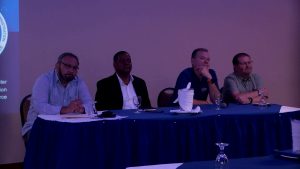 And with climate change intensifying storms, regional collaboration is more critical than ever. Minister of Disaster Risk Management Henry Charles Usher says the workshop provides Belize an opportunity to learn from the experiences of others in the region.
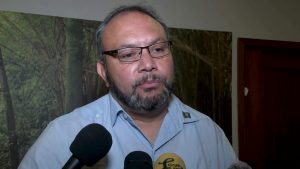
Henry Charles Usher
Henry Charles Usher, Minister, Disaster Risk Management
“It’s an opportunity to hear from our region, especially we have representation from Jamaica. We know that they just went through a category five hurricane last year, hurricane Melissa. So it’s an opportunity for us to learn, for us to be better prepared and for us to utilize the technology, utilize this modeling technology to be able to advise our communities with advanced early warning systems and certainly be able, better able to protect lives, protect property and ultimately to be able to bounce back in the event that there is some kind of natural hazard event.”
The hurricane season is quickly approaching and experts at this workshop hopes that better science, better planning and better communication will be the difference between life and death. Shane Williams for News Five.
Attention readers: This online newscast is a direct transcript of our evening television broadcast. When speakers use Kriol, we have carefully rendered their words using a standard spelling system.
Watch the full newscast here: