


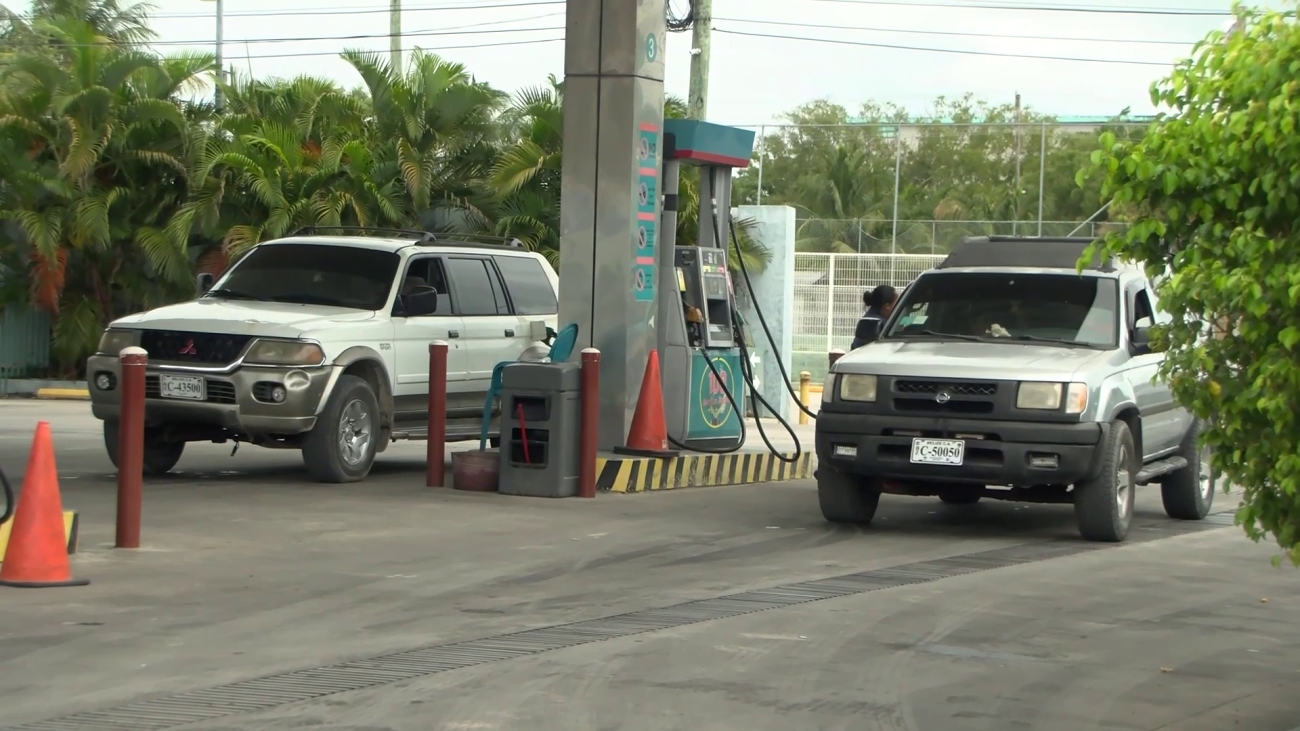
Briceño Defends Swift Action as Fuel Dealers Cry Foul Over Margin Cuts
A growing dispute over fuel prices is putting the Briceño administration on the defensive. Fuel dealers say government has crossed the line, allegedly slashing their margins without the consultation required under a two-decade-old agreement. Now, tensions are rising as dealers push back, insisting the move breaks a long-standing understanding of partnership and dialogue. But Prime Minister John Briceño is defending the decision, saying his government had to act fast as fuel prices climbed. While he says he’s willing to sit down with dealers, he also makes it clear that this is a real-time crisis, and waiting wasn’t an option.
Prime Minister John Briceño
Prime Minister John Briceño
“What happened back then in 2004, the dealers and the government decided let us set a formula so as the price goes you will be adjusting the dealer margin so the dealers wont be going to the government to say the margin is too small. So we allowed the market forces to adjust up and down. But we never foresaw back then, the prices was around five dollars, that we would go to thirteen and fifteen dollars. So the higher the price the bigger their margin. I just spoke to a former executive from Texaco, it was Texaco back then, he messaged and said do you realize Belize has some of the biggest dealer margins because of the price. As a government we felt that everybody has to do their part. Consumers are doing their part because they are paying more. The government has been cutting taxes and the Fin Sec released the numbers so people can see indeed we are cutting the prices. So it was only reasonable or fair for the dealers to take a cut. So that is what we did, a little under a dollar per gallon. Would you like to have more as a dealer? Of course I would like to have more. But the truth is it was never envisioned in 2004 that the price would go so high.”
PM Briceño is now calling on big fuel companies like PUMA to make adjustment to its pricing structure for rental fees and payouts on instore sales.
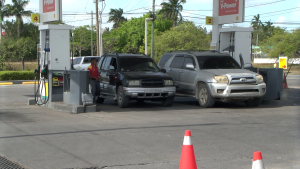 PM Briceño Explains Fuel Industry Mechanics
Turning now to fuel, Prime Minister John Briceño is lifting the lid on how prices at the pump are really set in Belize, and his explanation comes with a personal twist. As both the country’s leader and a stakeholder in the fuel industry, Briceño isn’t just speaking from the outside, any shift in margins or prices could affect him directly. Today, he broke down the formula behind fuel pricing, walked through how imports are scheduled, and explained why Belize still does not maintain a fuel reserve. It’s a rare inside look at a system that impacts every driver, straight from someone who operates on both sides of the equation.
Prime Minister John Briceño
Prime Minister John Briceño
“When it comes in, PUMA would send to the government this is the acquisition cost and this is the different shipping cost we charge. And then this is the throughput, so that they charge for every gallon passing through their facility. With that the government then, the dealers have a margin they get and it is done by a formula. Then the government says if this is the cost then these are the taxes. I don’t think the cost for the fuel is done including the tax, just the acquisition cost. And that is how it works. And then also remember that every district has a different cost because of the transportation cost and that has to be added on to the price of fuel. We get fuel based on how fast it is selling. We get fuel at least once or twice a month. Very few countries have reserves that could hold tens of millions of gallon in a tank. We don’t have. I wish we could, but we cant afford it.”
Attention readers: This online newscast is a direct transcript of our evening television broadcast. When speakers use Kriol, we have carefully rendered their words using a standard spelling system.
Watch the full newscast here: