


Eight New Arrivals Reignite Safe Third Country Debate
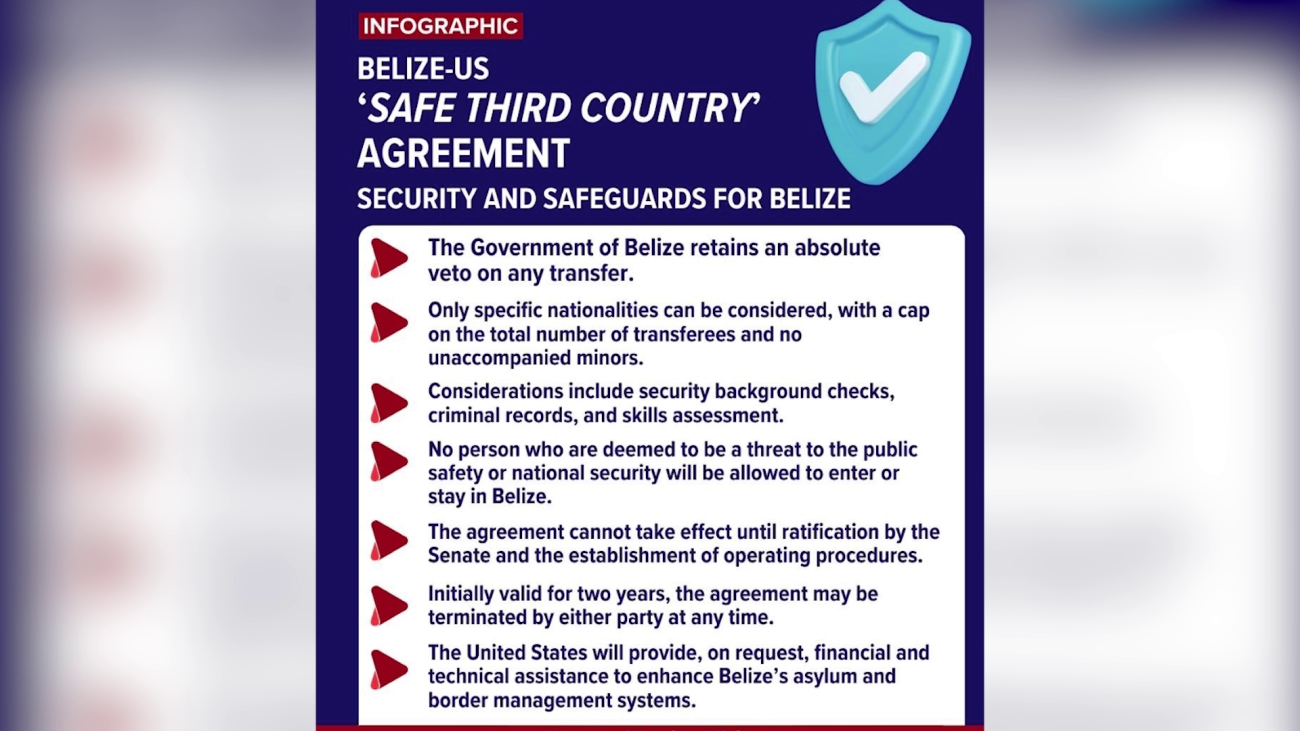
The arrival of eight more foreign nationals under Belize’s Safe Third Country agreement with the United States has once again put the program under public scrutiny. Some concerns have surfaced over whether any of those transferred may have criminal backgrounds, but both the Government of Belize and the U.S. Embassy insist that no one is accepted without strict security checks. Foreign Affairs Minister Francis Fonseca says the process is carefully vetted and that the initiative fits within Belize’s existing asylum and refugee system. We asked him about the latest arrivals and how government is responding to the concerns being raised.
Francis Fonseca
Francis Fonseca, Minister of Foreign Affairs
“As you know, we’ve received, a number of people under that agreement. I think initially we received one individual, a Haitian individual, and then, I think last week, as you said, eight other individuals. Some, I think four Haitians and then other Central American nationals. So, it’s really part of an amnesty program. Belize, as you know, we receive individuals seeking refuge, seeking amnesty from Central America all the time, several hundred every year. So we see this as supplementing that, complementing that program. So far it has been going very well.”
Britney Gordon
“Support is given for these asylum seekers from the UN Refugee Agency, correct?”
Francis Fonseca
“That’s correct.”
Britney Gordon
“But there are none given for Belizeans sent back home. As we know we’ve seen before, there was at least one Belizean that had no ties here. So what support is given to those people that are sent back?”
Francis Fonseca
“No, we have, ofcourse, we have programs in place for Belizeans who are sent back, who do not have families or support in that way. So through the Ministry of Human Development, through the refugee department, we also provide some support to them.”
According to the Government of Belize, each transfer undergoes an individual review process, and authorities may reject any request that does not meet established requirements.
Attention readers: This online newscast is a direct transcript of our evening television broadcast. When speakers use Kriol, we have carefully rendered their words using a standard spelling system.
Watch the full newscast here: