


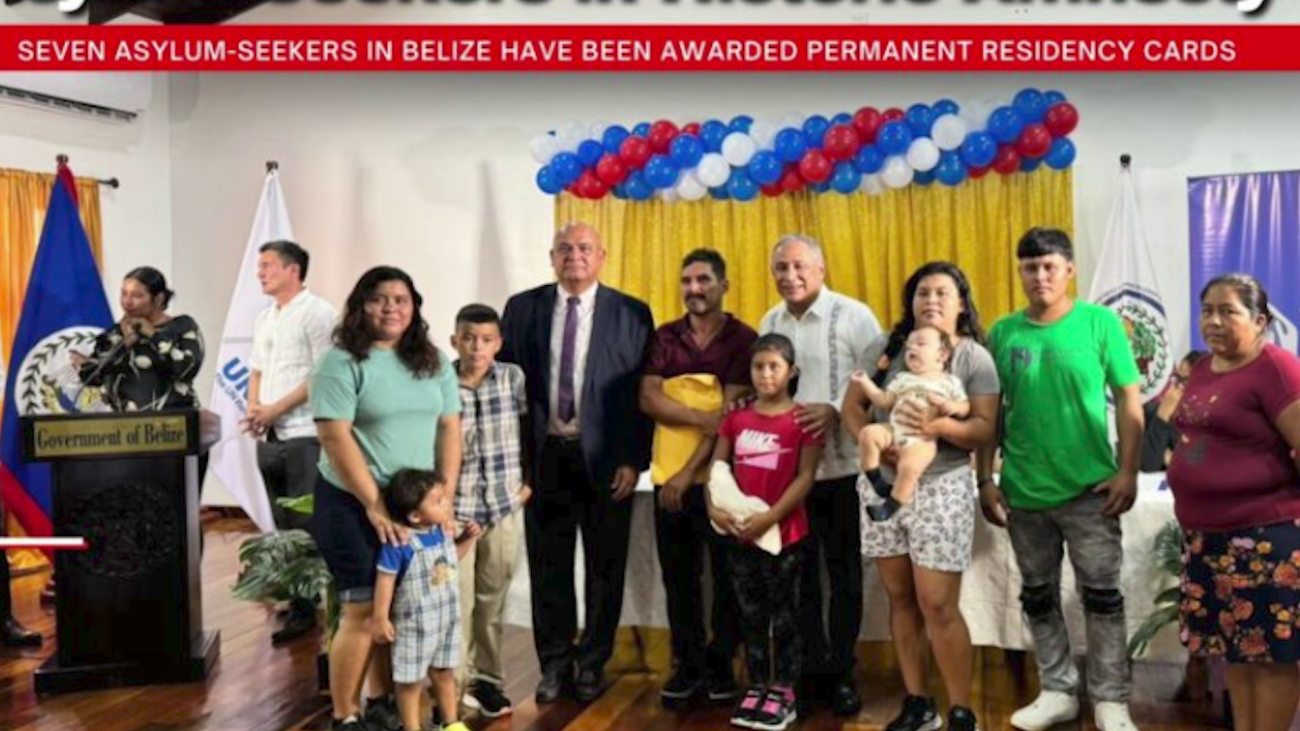
Eleven Thousand Immigrants Formalized Through Amnesty
For years, thousands of long-term residents lived in Belize without legal status. Government’s immigration amnesty program set out to change that, and it is now being called one of the country’s biggest successes. Some Belizeans remain skeptical of the program, and questions about what it means for jobs, services and the country’s future have not gone away. With the program now concluded and a second round on the way, we asked Minister of Immigration Kareem Musa what has come of it, and what it has changed for the people who went through it and for the country as a whole.
Kareem Musa
Kareem Musa, Minister of Immigration
“When you look at Belize from the outside, I know that we have been applauded for many things like our amnesty program which recently concluded giving residence to over 11,000 residents of Belize. And we look at our success in terms of the customer service and feedback that we get. It is great to see that we are making significant progress. It significantly changes their lives, and not just their lives, but also has a positive impact on our economy, because now they become part of the structure, part of the regular structure of government. They can access healthcare and education, but at the same time now they are obligated to pay taxes because they are part of a formal system of governance and part of our overall national landscape. And so that was a significant step for us, and hence the reason we intend to embark on a second round of amnesty, which will commence in January of 2026.”
Attention readers: This online newscast is a direct transcript of our evening television broadcast. When speakers use Kriol, we have carefully rendered their words using a standard spelling system.
Watch the full newscast here: