


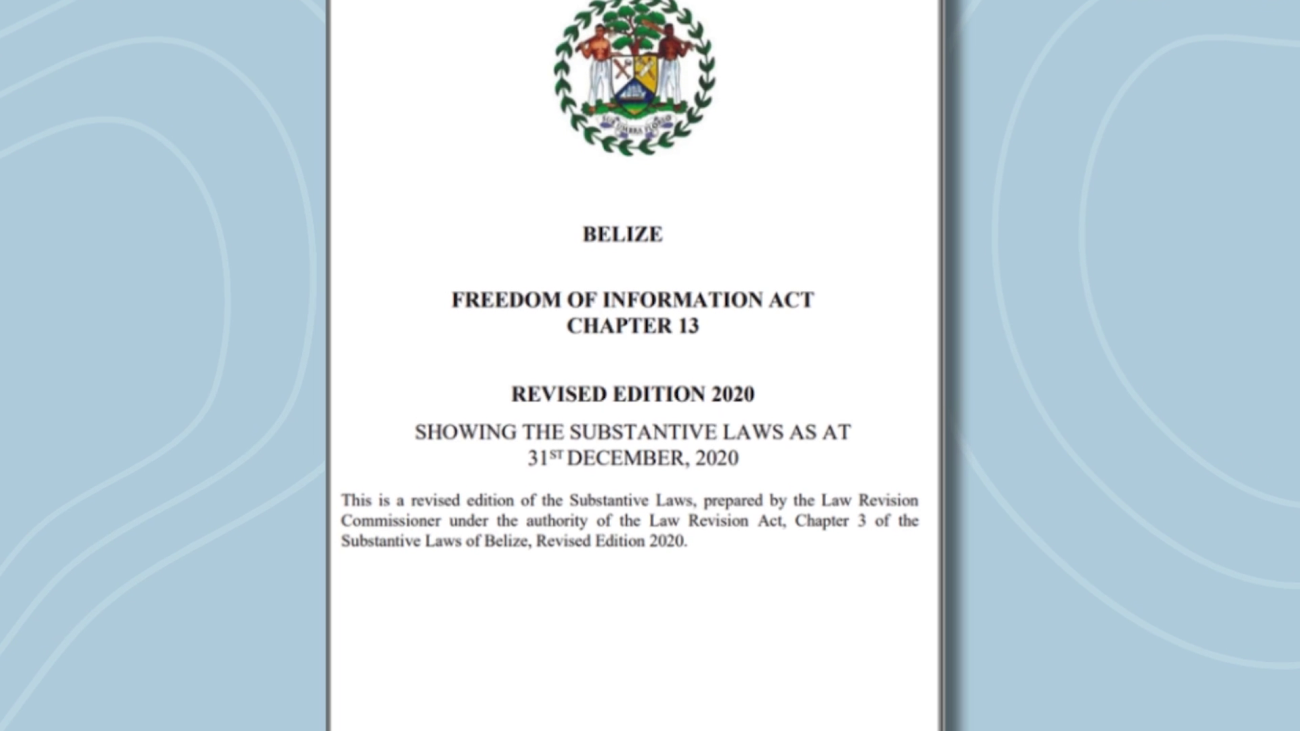
Freedom of Information Requests Meet a Wall of Silence
The law says Belizeans can demand answers from government, but getting those answers may be another matter. Journalists and activists say Freedom of Information requests can lead to delays, limited disclosures and outright refusals. So, is the law truly holding government accountable, or is public information still out of the public’s reach? News Five’s Britney Gordon investigates.
 Britney Gordon, Reporting
A right on paper means little if the answers never come. For more than thirty years, Belize’s Freedom of Information Act has allowed citizens to request public records and examine how government makes decisions and spends taxpayers’ money. Prime Minister John Briceño says Belizeans are now using that law more than ever.

Prime Minister John Briceño
Prime Minister John Briceño (File: October 6, 2026)
“We are putting more checks and balances within the systems to make sure that we could run government the way supposed to be and open and transparent, and then you will use the freedom for information act freely, I’ve never seen it be used so much like before.”
 But using the law and getting meaningful answers are not always the same thing. Social and political activist Jeremy Enriquez filed two requests earlier this year, seeking details about Belize’s electoral redistricting process and government spending on legal fees. Months later, he says the redistricting information fell short, while officials denied his request for legal-fee records altogether.
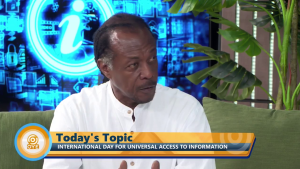
Jeremy Enriquez
Jeremy Enriquez, Social Activist (File: September 29, 2026)
“Unfortunately, the government refused to provide the information. And that I found very bothersome because this is public information that is due to the public. And for some reason, they feel that this is now their personal turf and the Belizean public have no right see how their monies is being spent, decision that are being made on their behalf and their rights.”
 Enriquez challenged the denial and successfully appealed to then-Ombudsman Gilbert Swaso, who ordered the partial release of the records. But the matter did not end there. The Attorney General’s Office challenged the Ombudsman’s decision in court, turning a request for public information into a legal dispute. Swaso also faced his own roadblock. While serving as Ombudsman, he requested information on the investigation involving nine Haitian girls brought to Belize in 2023. He says the Ministry of Immigration provided an inadequate response. Now that he is no longer Ombudsman, he says there is no officeholder to hear his appeal.
 On the Phone: Major Gilbert Swaso (Ret’d), Former Ombudsman
“If that individual, that requestor of the information is not satisfied or did not get a response form the department or the ministry to which he had made the request, then the likely next step is to make an appeal to the Ombudsman. In my case there isn’t any ombudsman.”
 Still, the Freedom of Information Act has produced results. During an investigation into government rental costs, News Five reporter Paul Lopez obtained a list of properties rented by the government and the cost of those leases from the Ministry of Public Service. But the ministry withheld some records under Section Thirty of the Act.
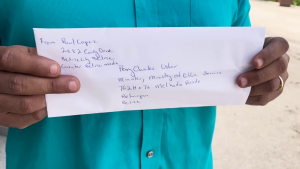
Voice of: Paul Lopez
Voice of: Paul Lopez, Reporter (File: July 23, 2025)
“This section states that a document is exempt if its disclosure would be contrary to the public interest because it would have substantial adverse effects on the national economy. Well, News Five’s request for these contracts is in the public interest. But the government’s rationale is that releasing copies of these rental contracts would increase rental prices for the ministries and consequently increase the annual budget.”
And persistence can sometimes change the outcome. News Five reporter Hipolito Novelo initially faced rejection when he requested records on COVID-19 vaccine spending and grant funding. The Ministry of Health and Wellness later released partial information. That leaves Belizeans with a mixed picture. The law can unlock government records, but it can also lead requesters through months of delays, appeals and even court battles. The real measure of transparency, then, may not be how often people use the Freedom of Information Act, but how readily the government delivers the answers they seek. Britney Gordon for News Five.
Attention readers: This online newscast is a direct transcript of our evening television broadcast. When speakers use Kriol, we have carefully rendered their words using a standard spelling system.
Watch the full newscast here: