


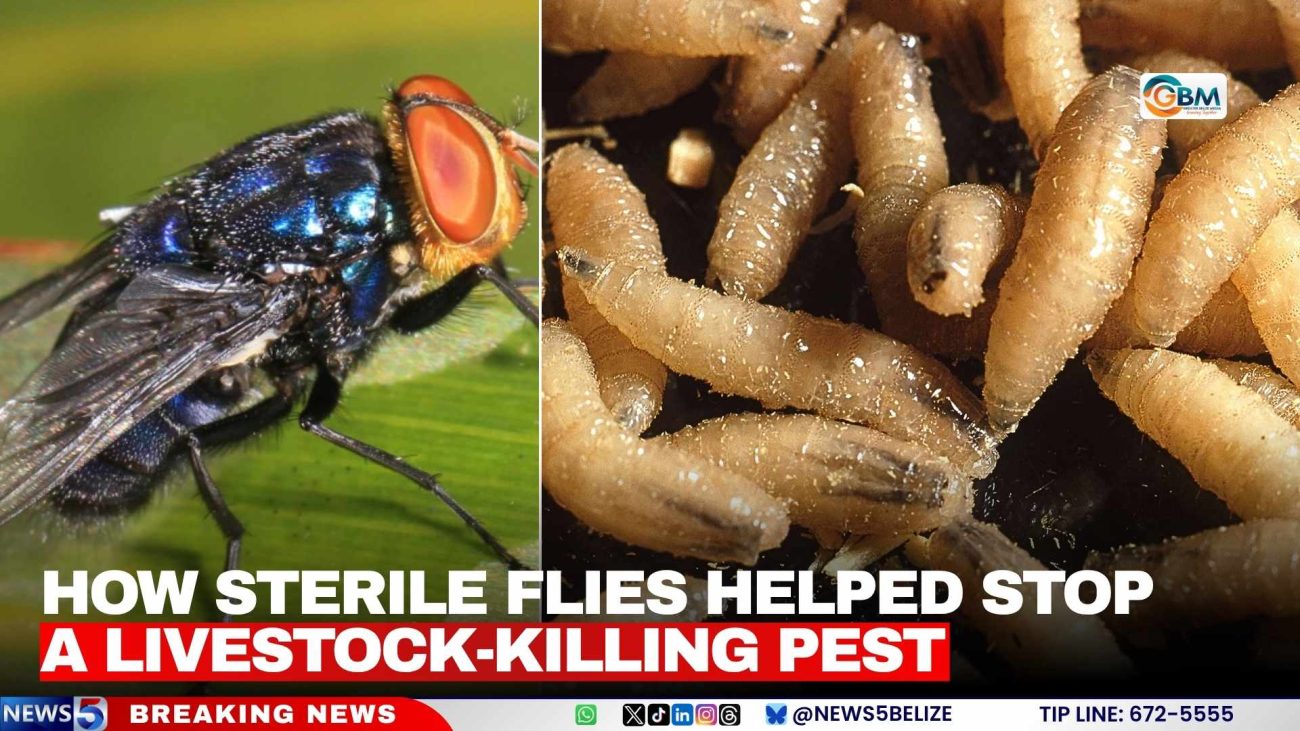
How Sterile Flies Helped Stop a Livestock-Killing Pest
U.S. agriculture officials have confirmed three additional cases of the New World screwworm, bringing the total number of known infections to five.
The latest cases include three calves and a goat in Texas, along with a dog in neighbouring New Mexico. The dog had not travelled to Mexico or Texas, suggesting the infestation may already be more widespread than the known cluster.
The New World screwworm is a fly larva that, unlike common flies, feeds on living flesh rather than dead matter. The flies lay their eggs in open wounds on warm-blooded animals, including cattle, wildlife, and pets. Left untreated, an infestation can kill an animal within days. In rare cases, humans have also been affected.
For decades, the pest was kept contained at the southern tip of Panama through a U.S. government programme that breeds sterile male flies and releases them by aircraft over affected areas. When sterile males mate with wild females, no offspring are produced, gradually collapsing the wild population.
The programme successfully pushed the screwworm out of North and Central America, but recent detections suggest it is moving north again.
In response to the latest cases, U.S. officials say they will deploy sterile flies in the affected areas while also working to establish a new sterile fly production facility in Edinburg, Texas.
The pest is not new to Belize. Cases have been recorded across the country, with cattle farmers among those most affected.