


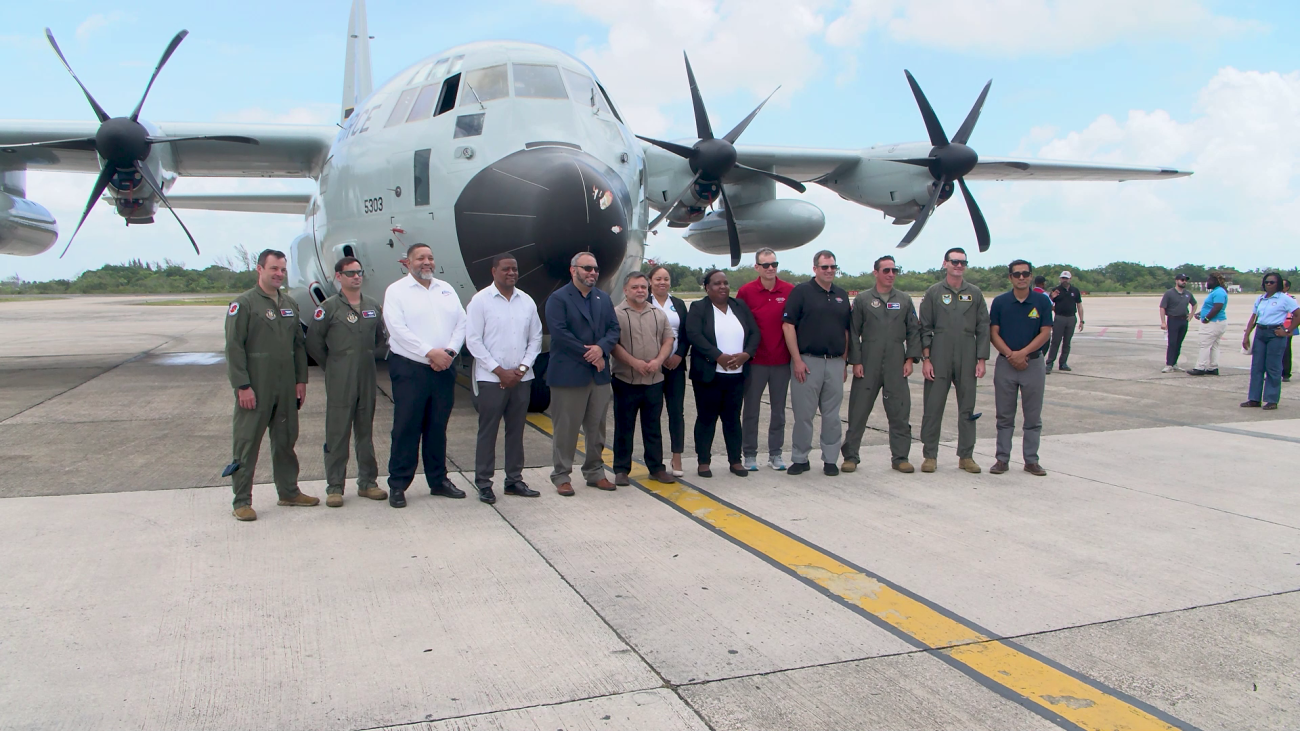
Hurricane Hunters Visit Belize 46 Days Before Season
With hurricane season just weeks away, Belize is getting a front row seat to the science behind storm forecasts. One of the world’s most critical hurricane tracking tools, the Hurricane Hunters, has touched down in the country as part of the 2026 Caribbean Hurricane Awareness Tour. The specialized aircraft is giving officials, students, and the public a rare, up close look at how crews fly straight into powerful systems to collect life saving data. It’s a timely visit as Belize prepares for another hurricane season. News Five’s Shane Williams has that story.
 Shane Williams, Reporting
It’s not your typical flight. These planes are designed to do what most would avoid, fly directly into hurricanes. The Hurricane Hunters support the U.S. National Hurricane Center by gathering real-time data from inside storms, providing critical information that satellites simply can’t capture.
Jordan Mentzer
Jordan Mentzer, Pilot, Hurricane Hunters
“We were flying into stuff that was kinda affecting Honduras and Belize and down there in the Bay of Campeche kinda y’all get some effects from some of that stuff too. Yeah, there’s a lot of times where we’re flying around Jamaica and south of Cuba and all that stuff. That’s certainly gonna affect you guys. Yeah. Where did we find you Hurricane Hunters who are brave enough or some would say crazy enough to fly into hurricanes? Yeah, probably more crazy. Yeah, probably more crazy. It’s, we’ve been doing this for a long time. The hurricane mission’s been around for a long time, so guys before me and gals before me have, we’ve kinda learned how to do things safely and what kind of things to avoid and the safest way to operate in a hurricane. As safe as we can be, that’s kinda how we try to operate.”
From the Gulf of Mexico to the Caribbean, these missions can last more than twelve hours, with crews spending hours inside dangerous storm systems all in the name of better forecasting.
Robbie Berg
Robbie Berg, Warning Coordinator Meteorologist, National Hurricane Center
“Our job is to forecast where they’re gonna go, how strong they’re gonna be and how big they’re gonna be over the next five days. And then based on that, we put out watches and warnings for the United States. We coordinate with the Met Service here in Belize to coordinate watches and warnings for this country and other countries across the Caribbean as well.”
That data is fed into advanced weather models, helping meteorologists predict a storm’s path, strength, and size which are information that can ultimately save lives.
Ronald Gordon
Ronald Gordon, Chief Meteorologist
“The data that these hurricane hunters collect as they fly into these storms are very important. They go into the complex computer models and enable us to better predict how the hurricane will intensify and where it will track. So it’s a very significant event and also we are, as the director of Hurricane Center, reminded us we are forty-six days away from hurricane season. So the public needs to be aware that hurricane season is around the corner. It’s coming and we need to be prepared.”
And with Belize sitting in the hurricane belt, that level of accuracy is crucial. Local forecasters work closely with international partners to ensure timely watches and warnings are issued when storms threaten.
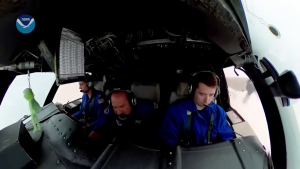 Shane Williams
“How does the hurricane hunters improve forecasting?”
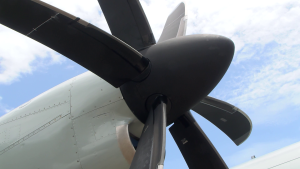 Robbie Berg
“Oh, yeah. Excellent question. So to have these planes is critical for our forecasts. The way I like to think about it is if you’re grilling a steak, you can see what the grill marks on the stake are like, and that’s like satellite pictures that we see from space. But you really don’t know what’s going on inside the middle of that steak until you cut into it. That’s what these planes do. They get us the data in the actual belly of the storm, so we understand how strong it is, where it’s located, what its pressure is, and then we can make a more accurate forecast.”
But beyond science, this visit carries a deeper purpose to inspire the next generation.
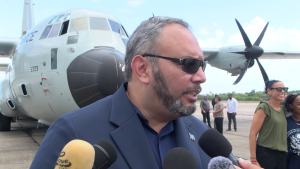
Henry Charles Usher
Henry Charles Usher, Minister of Public Service and Disaster Risk Management
“They are only actually three countries that they are visiting on this tour, so we’re very honored that they decided to come to Belize. I think they came from Honduras, and then from here they go to Puerto Rico. So this is really about inspiring the next generation of Belizean scientists, pilots, meteorologists, engineers, the young people that are going to be touring this aircraft for the rest of today. I’m really hoping that out of that they can really be inspired to study science because that’s what we need today.”
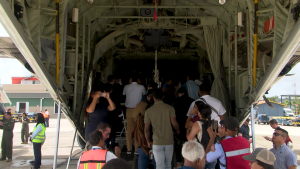 Dozens of students toured the aircraft, getting a rare glimpse inside the high-tech flying laboratory. It is an experience officials hope will spark interest in science, aviation, and meteorology.
Ronald Gordon
“About a month or two ago, we went on our Facebook page and advertised the event and let schools have a chance to book a tour. We didn’t want to pick anyone and to be biased, so we let it out there for the schools and the publics organize groups to decide, pick a time slot to come. And we are expecting several schools to come later on today. I’m seeing one school already appearing, which is very exciting for us. We want to inspire the next generation of meteorologists, forecasters and so forth.”
As hurricane season approaches, the presence of the Hurricane Hunter reminds us preparation and knowledge are key. And thanks to these brave men and women who fly into the eye of storms, Belize is better equipped with both. Shane Williams for News Five.
Attention readers: This online newscast is a direct transcript of our evening television broadcast. When speakers use Kriol, we have carefully rendered their words using a standard spelling system.
Watch the full newscast here: