


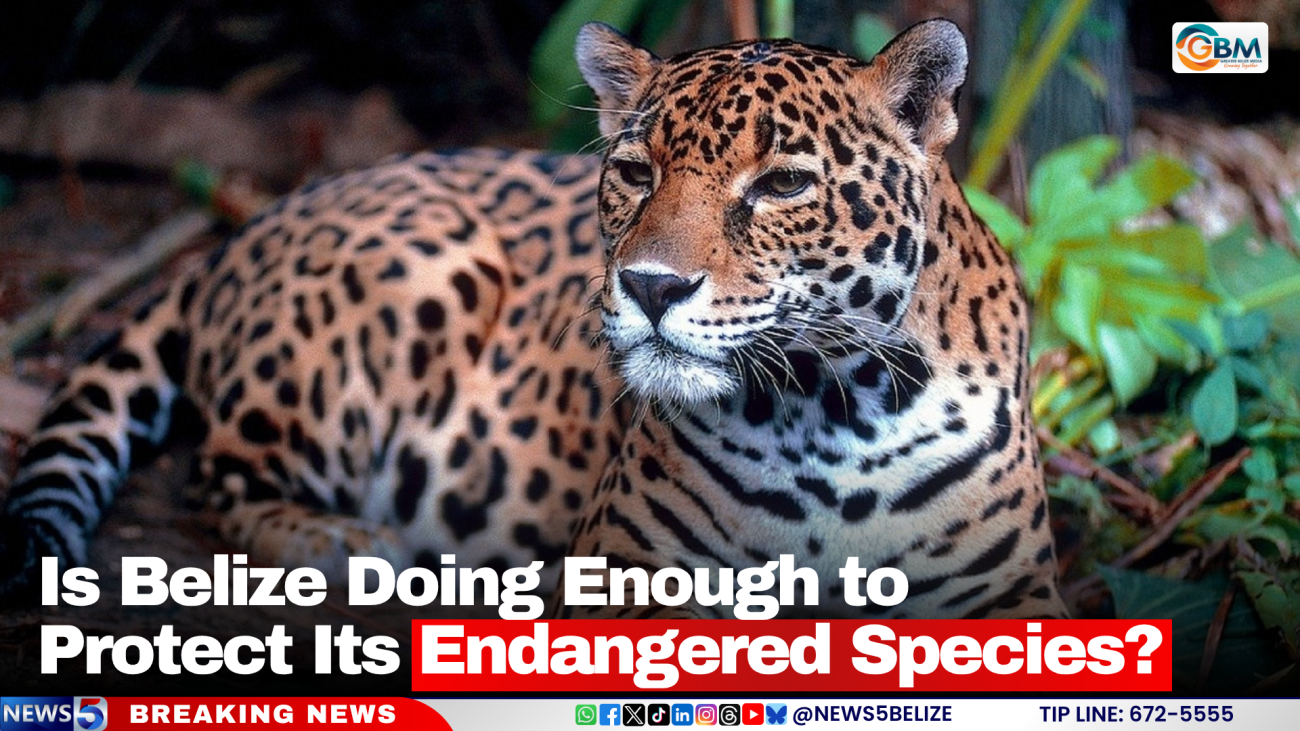
Is Belize Doing Enough to Protect Its Endangered Species?
Nearly 90% of countries have established national targets to protect and restore nature, but fewer than half of the targets assessed are on track, according to a new United Nations report examining global progress on biodiversity.
The State of Biodiversity Action report was released on October 18 ahead of the UN Biodiversity Conference in Armenia. It assesses progress towards the Kunming-Montreal Global Biodiversity Framework, adopted in 2022, which sets 23 targets for halting and reversing biodiversity loss by 2030.
The assessment found that countries’ commitments remain insufficient to meet several global goals, including conserving 30% of the world’s land and sea by 2030. It also identified funding shortages, gaps in monitoring and a lack of coordination across governments and other sectors as barriers to progress.
Belize’s National Wildlife Policy, Strategy and Action Plan 2025–2035 aims to prevent native species extinctions over the next decade through measures to protect habitats, address illegal harvesting, monitor populations and involve communities in conservation.
The policy identifies 244 terrestrial and marine species in Belize as being of global conservation concern, classified as critically endangered, endangered or vulnerable. It also identifies threats to wildlife, including habitat loss, agricultural and urban expansion, and human-wildlife conflict.
Among the species facing conservation challenges in Belize are the jaguar, Baird’s tapir, Central American spider monkey, yellow-headed parrot and hicatee turtle.
Belize is also working to strengthen its legal protections for wildlife through the proposed Wildlife Conservation and Management Bill, which is intended to replace the Wildlife Protection Act of 1981.
Victoria Chi, the Forest Department’s officer in charge of wildlife management, told News 5 that the proposed legislation would change how wildlife is protected and managed.
“Imagine from 1981, it has gone [through] more revision up to now that we’re at this stage, and this new bill is a game changer for wildlife management and conservation in Belize,” she said. “It’s going to change how we deal with wildlife.”
Chi said she hopes the bill will be passed by the end of November.
The global assessment warns that commitments alone will not be enough to reverse biodiversity loss. With the 2030 targets approaching, countries face the challenge of turning conservation plans into measurable results for threatened species and the ecosystems they depend on.