


New Tricks for Old Farms
Farmers from western Belize received electric fencing equipment and forage materials last Thursday as they completed a Farmer Field School programme aimed at improving livestock production and farm management.
At the closing ceremony, several participants shared how the training has already changed their operations. One farmer said he has grown roughly 200 leucaena seedlings since the programme began and has started dividing his land into paddocks while establishing elephant grass nurseries. This allowed him to produce forage on-site rather than transporting planting material from another farm.
Another farmer described selectively preserving naturally growing shade trees while clearing land, instead of planting new trees that cattle often damage.
A third participant explained how he now uses a drone to herd cattle, saying it has reduced his reliance on hired cowboys and made it easier to locate calves within large herds.
Other farmers raised concerns about unpredictable weather conditions affecting seedlings and forage crops, suggesting that irrigation systems and sprinklers could help protect those investments.
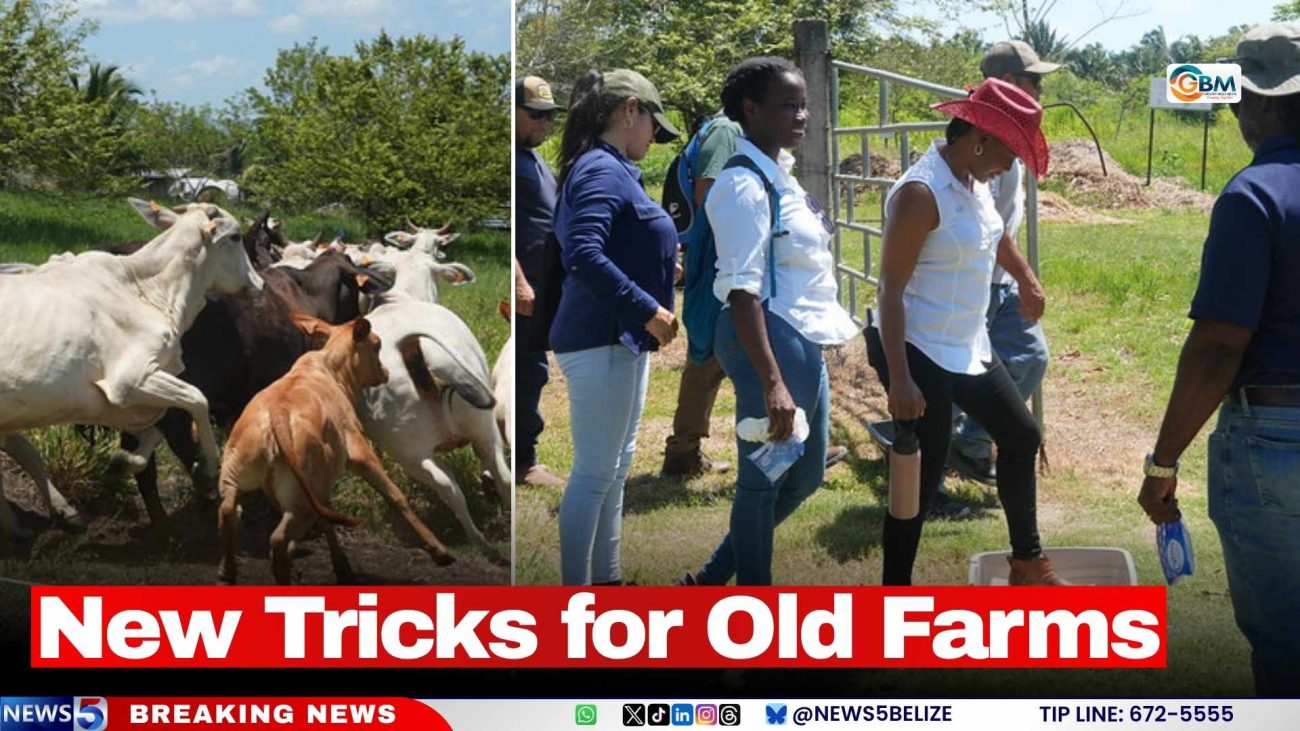
The programme included a tour of the Belmopan Model Farm, where participants observed rotational grazing and electric fencing systems, as well as a demonstration on screwworm treatment products.
BLPA Chief Executive Officer William Usher welcomed attendees and described the model farm as a teaching tool available to all members of the association. “This is your association. You can come here anytime. You can walk into this office anytime,” Usher said. “Don’t feel that we who are here are the ones dictating anything to you guys. You are here to dictate to us where to go as far as we are concerned in terms of this industry.”
The programme was developed by the Nature Conservancy (TNC) and implemented by BLPA in partnership with the Ministry of Agriculture, the Belize Maya Forest Trust, and the University of Belize Central Farm.