


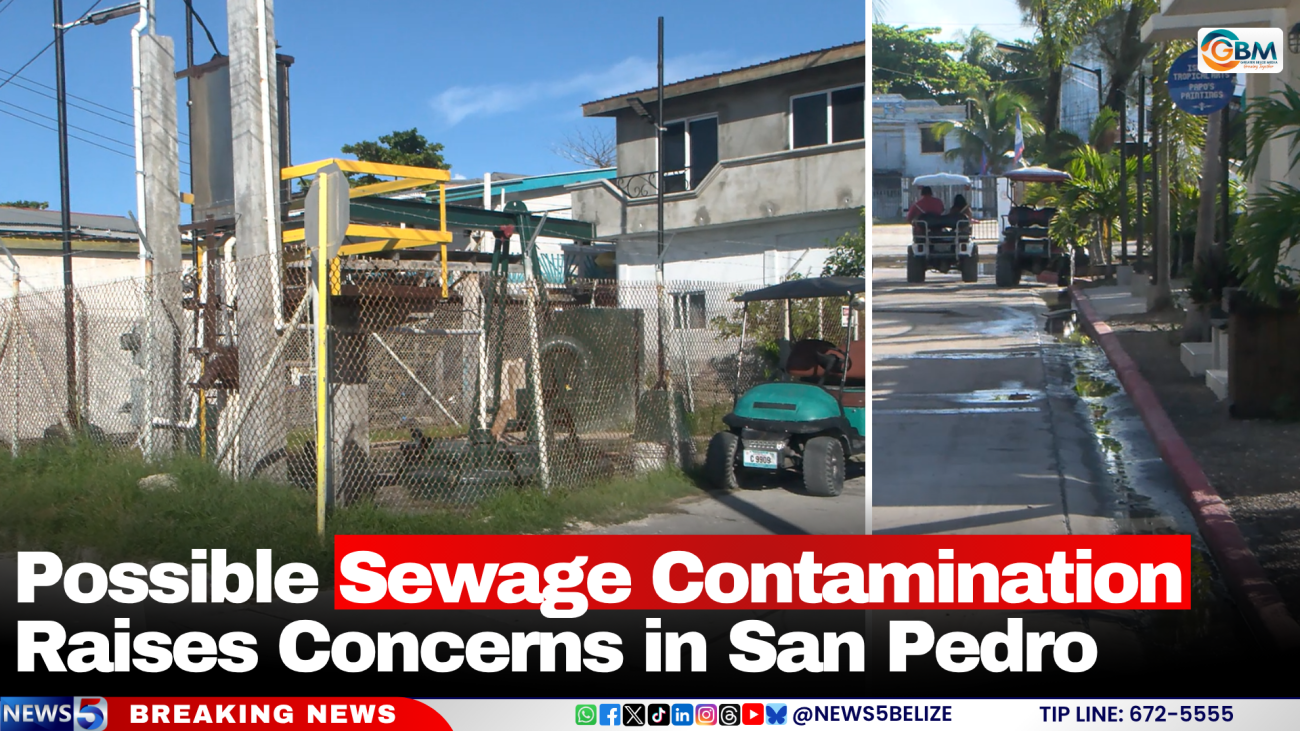
Possible Sewage Contamination Raises Concerns in San Pedro
Belize Water Services (BWS) says unusually high tides caused water to overflow around a manhole in San Pedro’s Embarcaderos area, following complaints from residents and business owners about a foul stench and concerns over possible sewage contamination.
Eric Rhaburn, BWS’s Water and Wastewater Operations Manager for the Cayes and West, said a manhole was submerged during high tide, allowing seawater into the system and causing hydraulic overloading. “We had a high tide. The manhole that’s connected near Station Three on Nurse Shark Street was submerged so we had a hydraulic overload. It had nothing to do with the pump station,” Rhaburn said.
He said personnel from the Department of the Environment (DoE) visited the area on Saturday morning and found no solids associated with a sewage discharge or foul odour.
However, he confirmed that no specific contamination testing was conducted. “DoE did not really conduct a test, per se. What they did was we took a look. They were looking for solids,” Rhaburn said.
BWS also disinfected the area as a precaution and deployed septic trucks over the weekend to pump the manholes. According to BWS, the trucks remain on standby.
Rhaburn said the water had since receded and that BWS plans to raise the manhole as a longer-term measure to prevent similar incidents during high tide.
The explanation follows concerns raised by Belize Rural South UDP caretaker Gabriel Zetina, who said the affected area includes homes, restaurants, a grocery store, and fishermen unloading their daily catch.
Zetina called for water testing to determine whether contamination was present and urged the San Pedro municipality to remove the wastewater from the area.
“I think two things need to happen right away. Which is the water testing. Test at what level the contamination is, if any… the second, which is to have the local municipality send a truck to completely take out all the sewer that currently sits there,” Zetina said.
BWS says the overflow was caused by seawater entering the system, not a malfunction at the pumping station. However, without specific contamination testing, it remains unclear whether the water posed any health or environmental risks.