


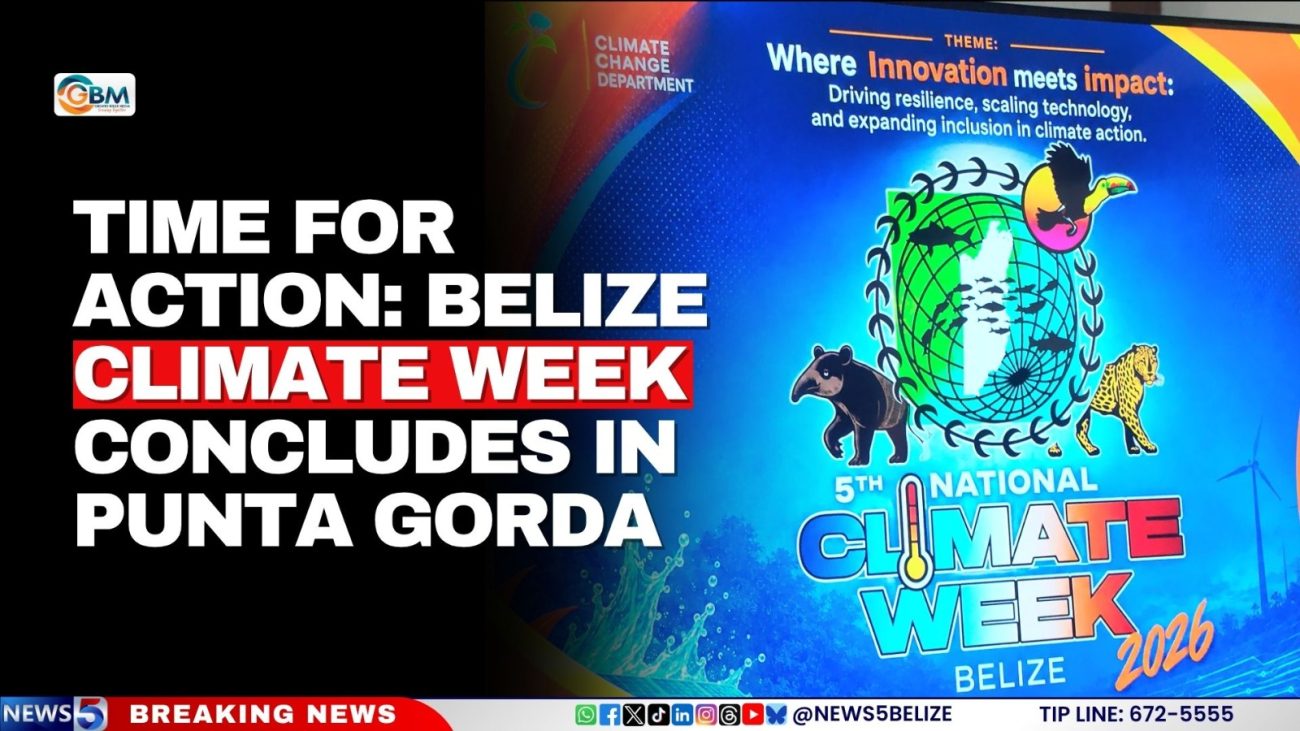
Time for Action: Belize Climate Week Concludes in Punta Gorda
National Climate Week opened on Friday in Punta Gorda, moving the spotlight onto southern communities facing everyday challenges like severe flooding, coastal erosion and unpredictable weather.
The four-day event focuses on turning climate promises into real support for affected areas.

Sponsored by RF&G
Organisers brought Climate Week to Punta Gorda this year to focus on indigenous communities and the struggles facing local farmers. Chief Climate Change Officer Edalmi Pinelo says, “Climate change is real, it’s here, we are feeling the effects.”
Climate Week took place under the theme “Where Innovation Meets Impact: Driving Resilience, Scaling Technology, and Expanding Inclusion in Climate Action”. Partnering with the United Nations Development Programme, Deputy Resident Representative Michael Lund states, “We need to both learn from each other and tap into that because that’s a way how we can also adapt to the things that we are experiencing with climate change.”
For Indigenous people, climate change directly affects their environment, livelihoods, health and cultural survival. Their land is deeply tied to language, spirituality, ceremonies and ancestral knowledge, all of which are at risk when forests disappear, or coastlines erode.
Maya Leaders Alliance spokesperson Cristina Coc states that Indigenous communities sit at the forefront of climate impacts, relying on careful land stewardship to safeguard their heritage. Unpredictable weather is already affecting traditional farming and wild food sources across the Toledo District. Cristina Coc says that “never before have we seen this kind of weather pattern that is really impacting crops, but also wild foods”.
Filiberta Coc, a resident of Otoxha Village, says that locals attended the event because “it’s hard to find to find wah lee money for our children and for us, right now, everything is expensive.”
Generations of close observation have built vital local expertise on forests, water, agriculture and weather patterns. Traditional methods like the Maya milpa farming system provide sustainable ways to secure food production and adapt to a changing environment. Lund praised local leaders for taking direct climate action guided by their cultural background