



Updated Forecast Warns of Sargassum Along Belize’s Coast
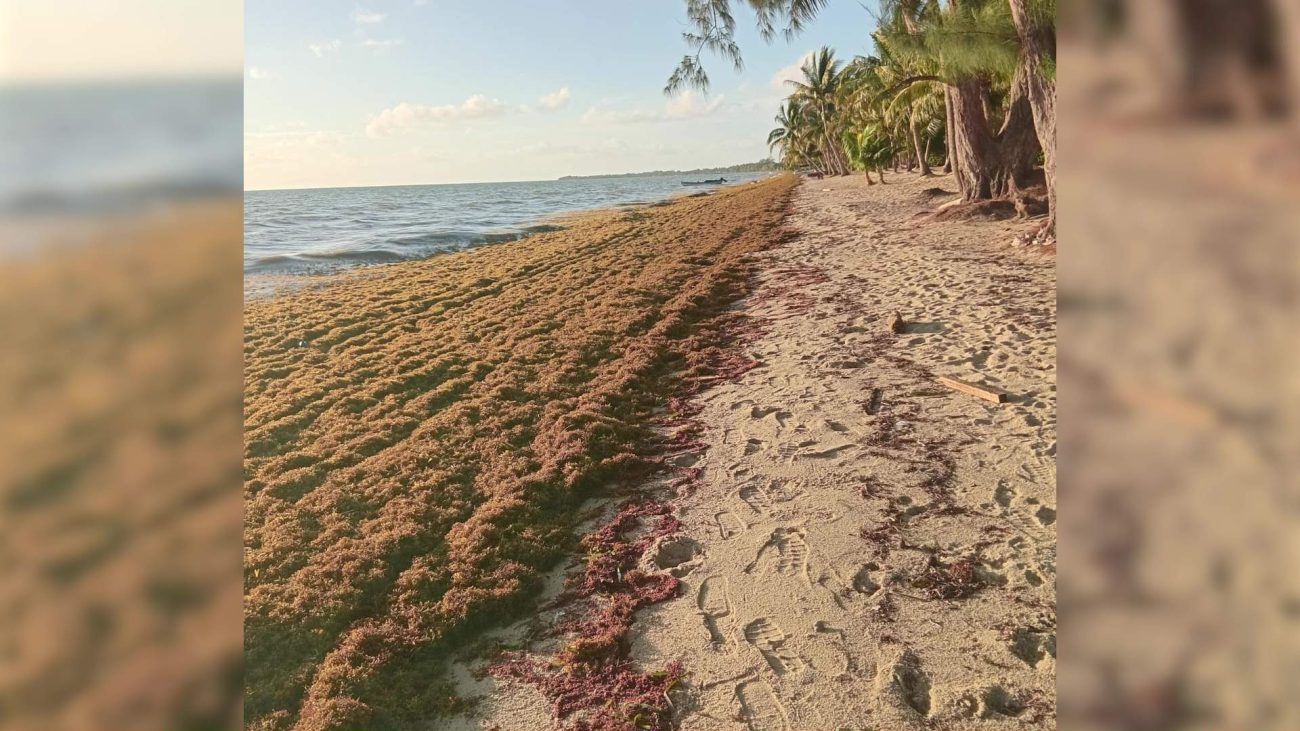
While families pack coolers and head to the seaside for the long Easter break, the ocean is sending a reminder that not all beach days are created equal. Along parts of Belize’s coastline, sargassum is once again creeping ashore, raising concerns for visitors and businesses in some of the country’s most popular coastal spots. So, before you dip a toe in the water, it’s worth knowing what’s ahead. We checked in with the National Meteorological Service, which has released an updated sargassum outlook, giving coastal communities and holidaymakers a clearer sense of what to expect in the days to come.
 On the Phone: Crystal Rosalez, Forecaster, National Meteorological Service of Belize
“We have a forecast valid from the first of April to the seventh of April and the forecast is for one moment observations indicating that over the south would be a major influx of sargassum for the next few days. And, in terms of probability and impact, San Pedro has a high probability for a moderate impact, Caye Caulker similar, while Hopkins and Placencia has a high probability for major impact over the next few days.”

 Sargassum Becomes San Pedro’s Erosion Solution
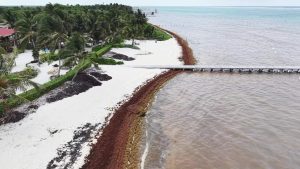
What was once written off as an eyesore on Belize’s beaches may now help save them. In San Pedro, sargassum is getting a second look, not as a problem, but as a resource. The Town Council is rolling out a science‑driven solution that pulls trapped sand from the seaweed and puts it back where it belongs: rebuilding eroded beaches. According to Biodiversity Scientist Valentine Rosado, the project is already operating at full scale, forming part of a wider, long‑term strategy to protect and restore the island’s fragile shoreline.
 Valentine Rosado, Biodiversity Scientist, San Pedro Town Council
“We had secured financing from the World Bank and partnership with other universities to implement a municipal level beach restoration program. So far what we have done, we have already established a beach management unit within the council. We are building capacity and getting scientific equipment. We have pilots already. So, this is not a pilot phase. It is a full-scale implementation. So, we are seeing all of these things come together. Now with the whole sargassum crisis we have huge amounts coming in. It is a brown algae’s and all of these plants they tend to become organize soil. When they decay they compress like a huge percentage, they become compressed. But what we found out last year, we weighted the sargassum and found out that forty-percent of every load of sargassum leaving the beach is all sand. So forty percent is all sand and the other sixty percent is what we are collecting. So that is huge.”
And while the sargassum threat persists along parts of the coast, officials say better forecasting, and even creative solutions on places like San Pedro, could help communities adapt rather than simply brace for impact.
Facebook Comments