


Viral Chokehold Video Reignites Police Use of Force Debate
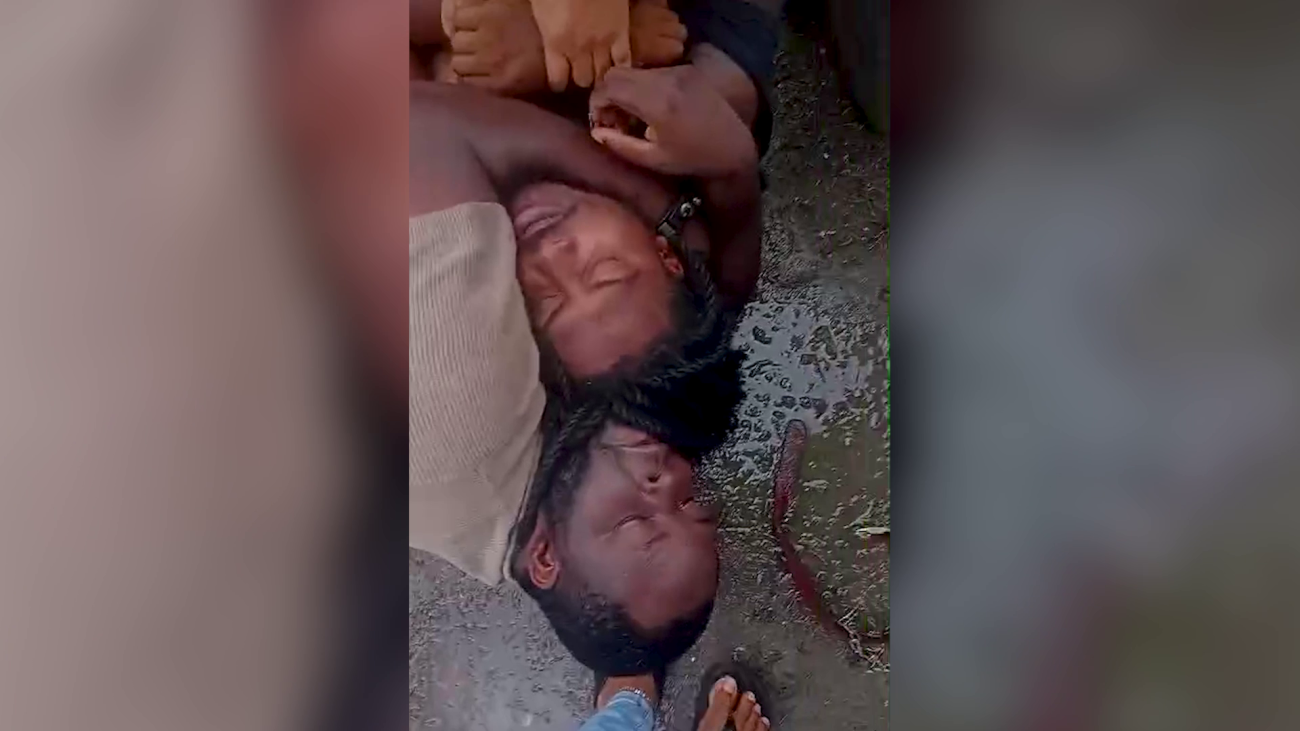
Police once declared that officers should no longer use chokeholds to restrain civilians. But five years later, the controversial maneuver remains part of the department’s deadly-force procedures, and a viral video from Unitedville has reopened the debate over when an officer can legally use it. The video shows an officer placing Samuel Parham in a chokehold during a confrontation that allegedly left the officer with a broken arm. Parham now faces a grievous-harm charge, while the Professional Standards Branch investigates whether the officer crossed the line. So, was the chokehold justified as a last resort, or did it amount to excessive force? News Five’s Paul Lopez examines the rules and the questions surrounding this latest case.
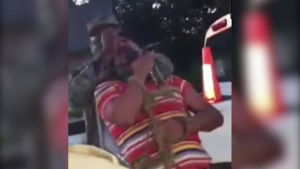 Paul Lopez, Reporting
It is a restraint police said they would stop using. Yet a viral video recorded in Unitedville has once again placed the police chokehold, and the department’s own policy, under intense scrutiny. Back in 2021, following widespread outrage over the death of George Floyd in the United States and a separate video showing a Belizean officer putting a motorist in a chokehold, the Belize Police Department announced an internal ban on the maneuver as a method of restraint.
Chester Williams
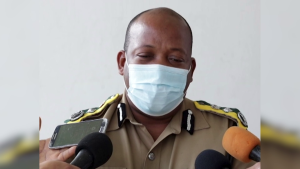
Chester Williams, Commissioner of Police (File: January 26, 2021)
“Now, I am not going to justify the actions of the officer in terms of putting the person in a chokehold because we do have a policy following the George Floyd incident in the U.S. We created our own internal policy to the effect that police officers in Belize are no longer to use the chokehold as a method to be able to restrain a person. So, the officer in question’s conduct would go against our internal policy, and so I have directed PSB to look at it.”
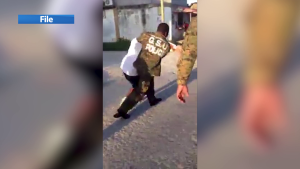 But the issue never went away. Supporters argue that an officer facing aggressive resistance may sometimes have no other way to bring a dangerous situation under control. Many argue that cutting off a person’s airflow or blood supply can cause serious injury or death. Now, another police encounter has brought those arguments back to the forefront. The footage shows an officer holding Samuel Parham around the neck as people nearby repeatedly call on the officer to release him.
“Let he go.”
Parham’s family is now demanding answers about the officer’s actions and the training behind them.
 Voice Of: Nikkita Perez, Relative of Detainee (File: October 19, 2026)
“That is something that raised a big concern with us, because we want to know if that is something legal in Belize. We want to know if it is something legal, if that is something they were trained in the Police Academy when they went for training. We want to know if that is a protocol they are following.”
The answer is not as straightforward as the department’s 2021 announcement may have suggested. While police prohibited chokeholds as a routine method of restraint, the department’s policies and procedures manual still classifies the maneuver as deadly force. According to Assistant Superintendent of Police Stacy Smith, an officer may use it only as a last resort when someone faces an imminent threat of death or grievous bodily harm.
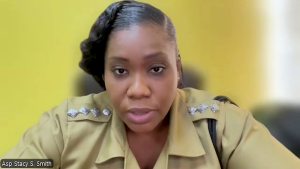
Stacy Smith
ASP Stacy Smith, Staff Officer (File: October 19, 2026)
“It must be used only as a last resort when there is an imminent threat to life or injury in terms of grievous bodily harm. Those are the circumstances in which a chokehold can be used. I will also say that the manual provides for the use of deadly force, under which chokeholds fall, to prevent an arrest from being defeated, similarly when there is a risk of death or grievous bodily harm.”
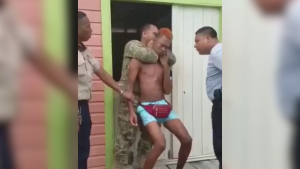 That exception is now central to the investigation. The Professional Standards Branch must determine whether the officer reasonably faced that level of danger when he placed Parham in the chokehold. Police say the same confrontation left the officer with a broken arm, and investigators have since charged Parham with grievous harm.
ASP Stacy Smith (File: October 19, 2026)
“I must also say that the subject of that entire interaction has since been charged with grievous harm because the police officer suffered a broken arm.”
The court will ultimately decide whether the criminal case against Parham stands. Separately, the Professional Standards Branch must determine whether the officer’s actions met the department’s strict threshold for using deadly force. But the investigation also leaves a broader question for the Police Department: if chokeholds are prohibited as a method of restraint, how clearly can officers and the public distinguish between an unlawful hold and a lawful last resort? Paul Lopez for News Five.
Attention readers: This online newscast is a direct transcript of our evening television broadcast. When speakers use Kriol, we have carefully rendered their words using a standard spelling system.
Watch the full newscast here: