

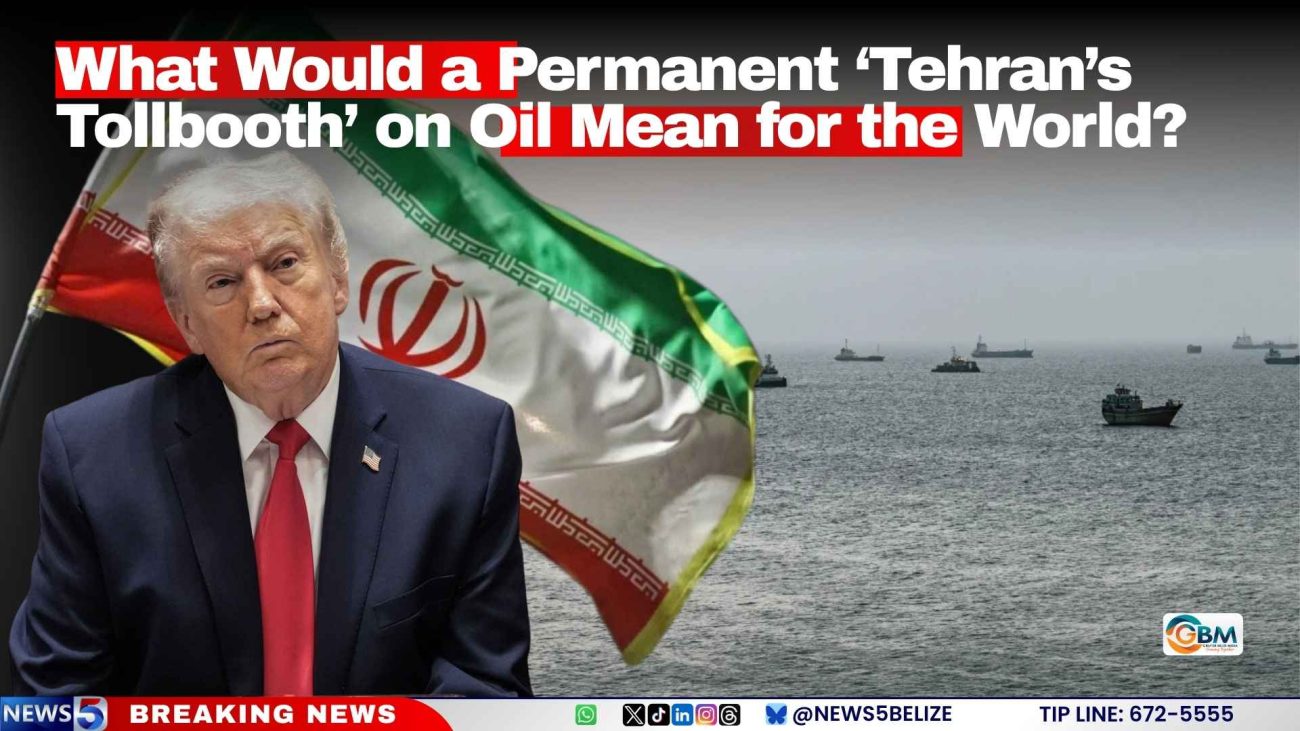
What Would a Permanent ‘Tehran’s Tollbooth’ on Oil Mean for the World?
If Iran gets its way, the Strait of Hormuz is about to become the world’s most expensive toll road, fundamentally altering global energy economics.
As diplomatic backchannels buzz following a fragile US-Iran memorandum of understanding, Tehran is already looking past the immediate horizon. Abas Aslani, a senior research fellow at the Center for Middle East Strategic Studies in Tehran, revealed to Al Jazeera that Iran views the current 60-day diplomatic window as a prelude to a permanent revision of maritime law. Aslani warned that “for Iran, the Strait of Hormuz after 60 days … will be subject to receiving fees for the services that are provided.”
According to experts, a permanent “Tehran tollbooth” on the 20% of global petroleum that traverses the chokepoint would institutionalise maritime extortion. It forces a grim calculus upon the West: formalise payments to an adversarial regime or watch global supply chains fracture. While Oman faces immense American pressure to construct an alternative southern corridor, the Islamic Revolutionary Guard Corps (IRGC) has flatly rejected it, Al Jazeera reports.
Meanwhile, US President Donald Trump continues to refute Iran’s bid to slap a transit toll on ships moving through the Strait of Hormuz. Speaking at a tense Gulf Cooperation Council meeting in Bahrain, US Secretary of State Marco Rubio declared there was “no reconstruction fund” or financial compromise on the table for Tehran. Rubio claimed there is “zero support” from Gulf states to tolerate what Western allies view as maritime extortion.