


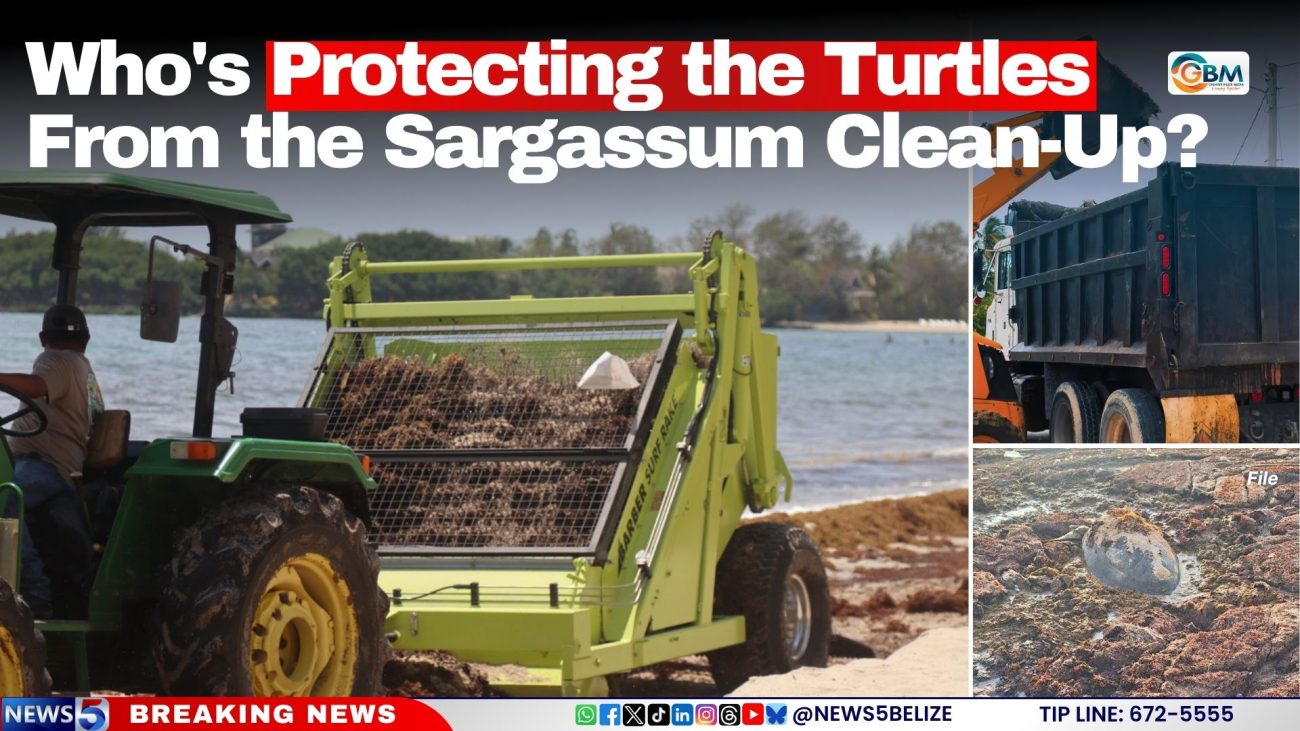
Who’s Protecting the Turtles From the Sargassum Clean-Up?
Environmental activists in Playa del Carmen, Mexico, are warning that heavy machinery used to clear sargasso from beaches is destroying marine life and worsening coastal erosion.
According to Rivera Maya News & Events, Guadalupe de la Rosa, president of civil association MOCE-YAS-CUXTAL, said the challenge is not removing sargassum but doing so without destroying marine life. Activist Carlos Jiménez told the outlet that machinery used to compact sand parallel to the shore harms species living beneath it, while equipment that collects sargassum at sea damages marine life further.
Hawksbill and loggerhead turtles bury their eggs in the sand. Rays, flatfish, ghost crabs and bivalves also depend on it. De la Rosa said no studies or integrated beach management exist to guide the clean-up efforts. “The problem of coastal erosion is getting worse, and there are no studies or integrated beach management. They are working improvisationally, and we will hardly recover our beaches as they were before,” she said.
Belize uses a similar method. Teams dispatch trucks to shorelines to load and haul away sargassum, the same approach of heavy machinery activists in Mexico linked to sand compaction and marine life nest destruction.
This may be the only approach Belize has undertaken to get rid of sargassum, and it now puts a new pressure point when considering Belize’s own fragile marine ecosystem.
The Hol Chan Marine Reserve confirmed the first turtle nest of the 2026 season on April 28th in northern Ambergris Caye. By June 16th, that count reached 18. Hol Chan has flagged that this year’s sargasso influx is significantly heavier than usual and expects further erosion as the season continues to November.
It raises concerns about whether Belize needs to look at machinery-specific nesting protection measures.