


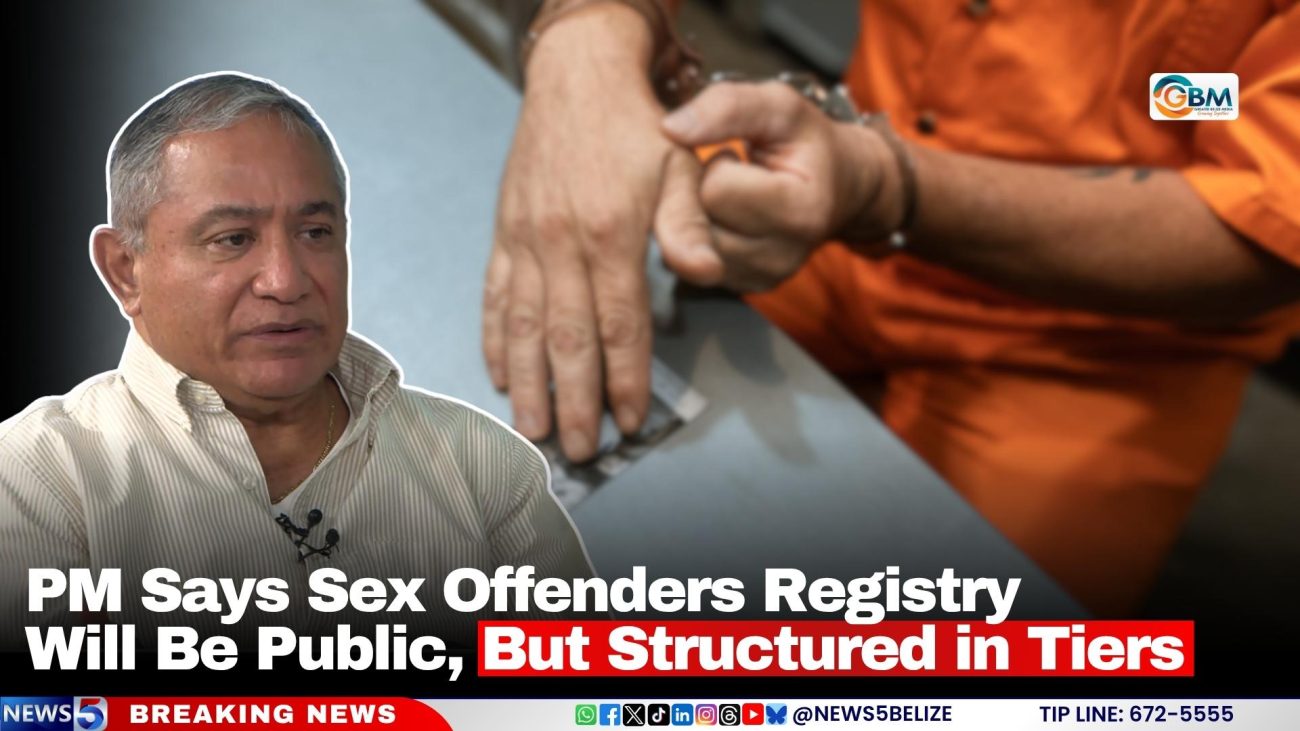
PM Says Sex Offenders Registry Will Be Public, But Structured in Tiers
As calls grow for Belize’s Sex Offenders Registry to be made public, government agencies, judges, police and advocacy groups met in Belmopan this week to discuss how sexual offences are handled and where gaps still exist in protecting survivors.
The meeting, hosted by the Ministry of Human Development alongside the National Commission for Families and Children (NCFC) and the National Women’s Commission (NWC), examined Belize’s legal framework around sexual offences and the obstacles survivors face from the moment they report an incident through the court process.
The discussion comes just weeks after Rossana Briceño, Belize’s Special Envoy for the Development of Families and Children, publicly called for the country’s Sex Offenders Registry to be made accessible to the public. Topics included rape, incest, unlawful sexual intercourse, sexual assault, trafficking in persons, commercial sexual exploitation of children, witness protection laws and the operation of Belize’s Sex Offenders Registry.
Prime Minister John Briceño has since confirmed that the issue was recently raised in Cabinet and said the government is currently working through the details needed to make that happen.
Speaking on Open Your Eyes earlier this week, Briceño said the registry will operate on a tiered system, with public disclosure reserved for the most serious and repeat offenders rather than everyone on the list.
“If there’s a repeat offender in your neighbourhood, an alert can be made, or you can also find out to say, hey, at the corner shop, you see that guy over there? He’s a repeated offender. Tell your children, Stay away from that,” Briceño said.
But the prime minister drew a distinction between those cases and others involving first-time offenders or situations where the offender may not have known the other person was underage. He said those individuals should have a path to rehabilitation without permanent public stigma, though he was careful to note he was not minimising the offence.
“Sometimes we do a mistake. And in many instances, you want to redo your life. And if you are going to live with that overhead for the rest of your life, then you’re condemned. Again, I’m not in any way suggesting that it is okay. It is not okay,” he said. “We’re following what the experts are telling us.”
Briceño said the Police Department, the Attorney General’s Ministry, and the Ministry of Human Development are working out exactly how the tiered system will function.