


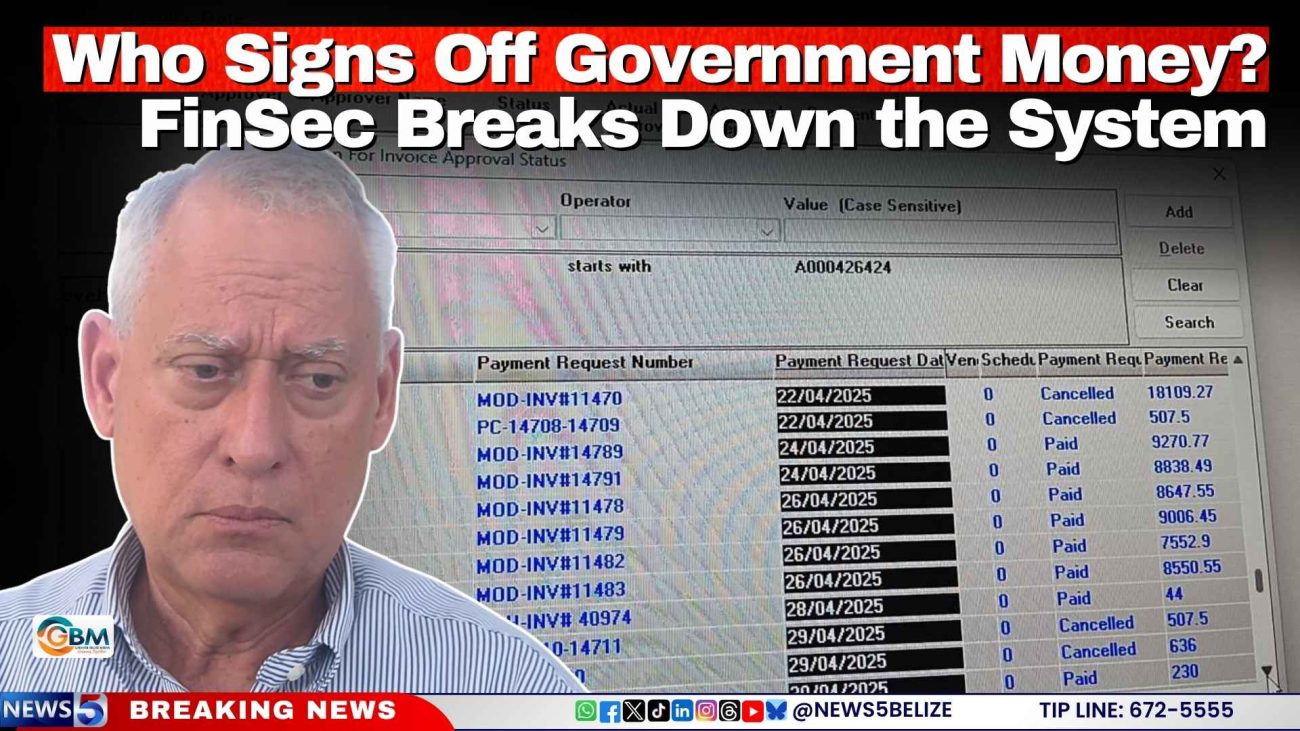
Who Signs Off Government Money? FinSec Breaks Down the System
As an audit into procurement and payment practices at the Ministry of Defence tied to the Mira millions gets underway, Financial Secretary Joseph Waight says investigators will ultimately determine who, if anyone, should be held accountable.
According to Waight, a payment typically begins with a clerk entering the information into the government’s SmartStream system. The transaction is then reviewed and approved by more senior personnel within the ministry.
“Each has to be signed individually,” Waight said. “Somebody raises the invoice in the system, usually a junior clerk. The senior clerk signs that. The finance officer then looks at it again and makes sure all the paperwork is in order.”
For payments above $10,000, Treasury must also review and approve the transaction before funds are released.
“Very rarely does a minister get involved,” Waight said. “It’s not his function to look at the tendering process.” Instead, procurement decisions are typically reviewed by committees, chief executive officers, accounting officers, and financial staff before contracts are approved.
When asked what has become of the financial officer who approved payments during the period under review, Waight said the government is waiting for the audit’s findings before determining whether any disciplinary action is necessary.
The Financial Secretary acknowledged that the case has exposed potential weaknesses in government oversight and said reforms may be necessary once the investigation is completed.
Among the options being discussed is the creation of a central procurement office, a proposal previously floated by Prime Minister John Briceño.
Waight also suggested that the government should consider reviving surprise inspections of ministry accounts. “In the old days, you used to have spot checks. Treasury used to send out surprise surveys,” Waight said. “We need to do those again.”
He was also questioned about whether the public should have greater access to SmartStream payment records. While Waight agreed taxpayers have a right to know how public funds are spent, he argued that some privacy protections must remain in place for suppliers and individuals involved in government transactions.
“When you stay behind your desk for too long, you get a little detached from what is happening out there,” Waight said. “But it requires interrogation to find out. I don’t know if it’s going on in the rest of the government. Big ministries spend big money.”