


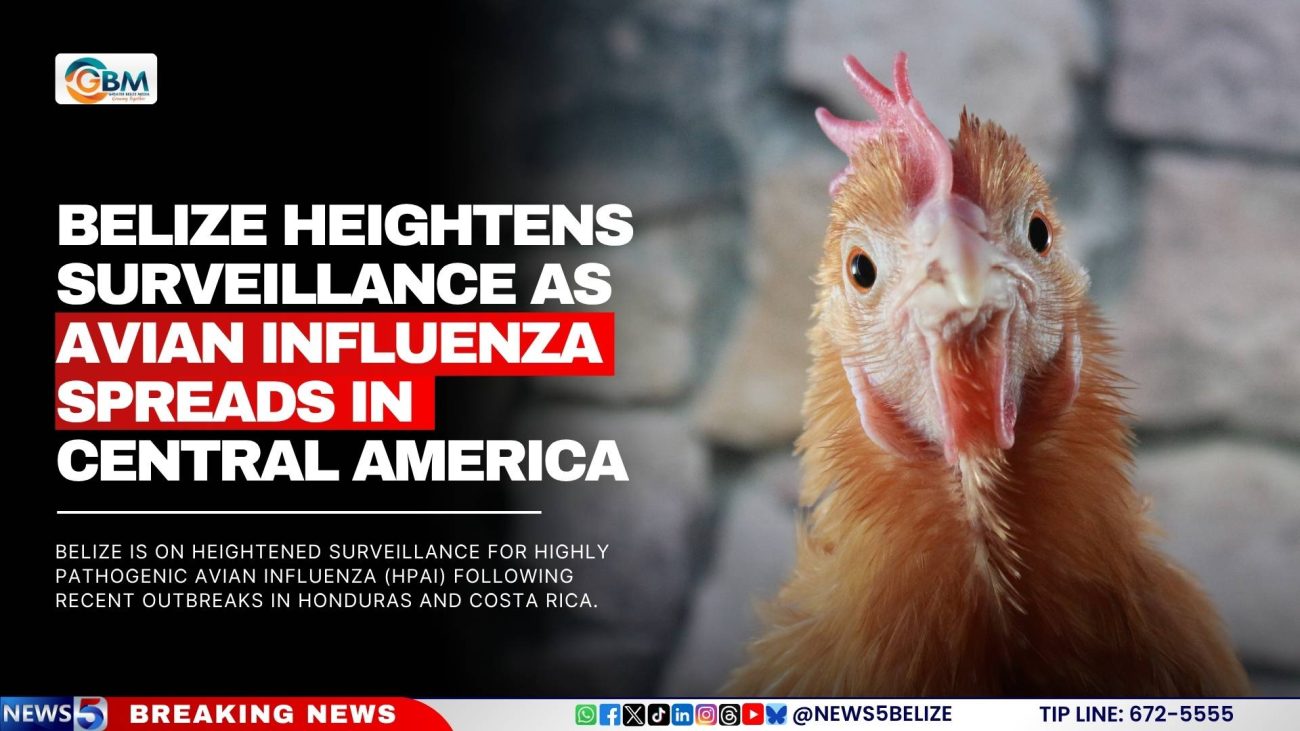
Belize Heightens Surveillance as Avian Influenza Spreads in Central America
Belize is on heightened surveillance for Highly Pathogenic Avian Influenza (HPAI) following recent outbreaks in Honduras and Costa Rica. This is according to a statement issued by the Belize Agricultural Health Authority (BAHA).
While Belize remains free of the virus, BAHA warns that the risk of introduction is considered high due to the country’s proximity to affected nations, as well as the movement of wild and migratory birds across the region.
BAHA is urging poultry producers, livestock owners, and the general public to immediately report any sick or dead birds (wild or domestic) to the relevant authorities, including BAHA, the Ministry of Agriculture, or the Forest Department. The public is also being advised to avoid handling or transporting dead or sick birds unless absolutely necessary and to strengthen biosecurity measures on farms and backyard poultry operations.
HPAI is a highly contagious viral disease that primarily affects birds such as chickens, turkeys, ducks, geese, quail, and wild species. In rare cases, it can also be detected in mammals and humans. According to BAHA, infected birds may show symptoms including sudden death, weakness, loss of appetite, nasal discharge, lack of coordination, swelling of the head and limbs, and discoloration of the combs and wattles.
BAHA also cautioned that illegal importation and movement of birds and animal products continues to pose a serious threat to Belize’s animal health status and food security. The authority warned that an outbreak of HPAI could have significant consequences for poultry production, livelihoods, trade, and national food security.