


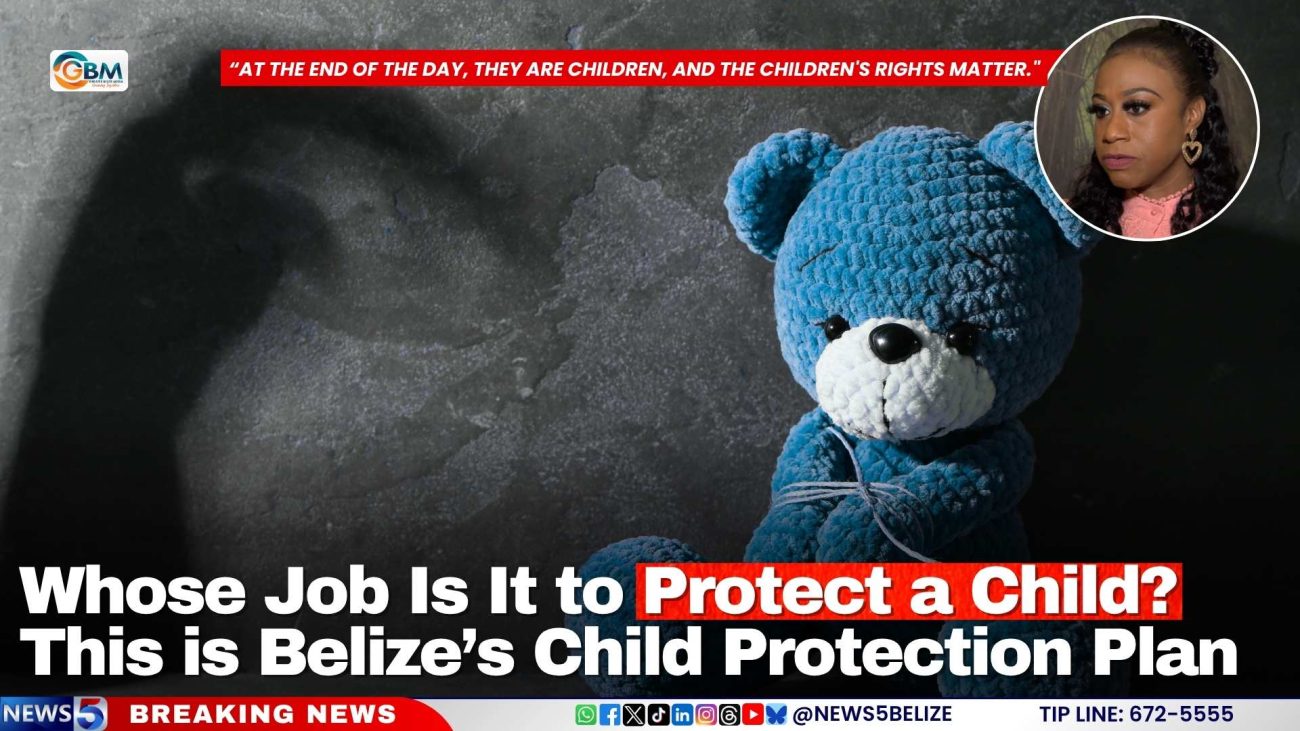
Whose Job Is It to Protect a Child? This is Belize’s Child Protection Plan
A child who enters Belize’s justice system should not leave it more vulnerable. That is the principle behind a new national push to replace punishment with protection for children who come into contact with the law.
Today, the National Committee for Families and Children (NCFC) unveiled a five-year Child Protection and Child Justice initiative developed with UNICEF. It marks a shift away from reactive responses toward a coordinated national strategy for children who come into contact with the law, whether as victims, witnesses, or alleged offenders.
The initiative was launched alongside a Child Justice Guidelines Validation Session in Belize City. The proposed guidelines prioritise privacy, rehabilitation and diversion programmes that aim to steer young people away from crime and back into society.
NCFC Director Shakira Sutherland said the framework places children’s rights at the centre of every decision. “It’s to ensure that children who are victims be protected… That children who have been in conflict with the law or contact with the law… be protected because at the end of the day, they are children, and the children’s rights matter.”
Among the guidelines’ core protections is the withholding of names for children accused of crimes. “It’s important to know that information about any child will be withheld because it’s all about the protection of the child, whether it’s mental or physical. We take the protection of children very, very seriously,” Sutherland said.
Sutherland said the guidelines also lean heavily on diversion programmes, which the Department of Human Services and Community Rehabilitation Department are finalising. It is designed to help children in conflict with the law reintegrate into society rather than face the full weight of the justice system.
Parents and children, including child parliamentarians, were present at today’s session. Joselynn Campos, one of the attending child parliamentarians, said the guidelines fill a gap that has long failed young people. “Children that come in contact with the law are just placed in a vulnerable situation, and the way that these situations are dealt with isn’t necessarily done properly,” Campos said.
“So these guidelines are very important so that we can come to understand their situation and how they feel and why they react to certain things,” she added.
The next step is implementation, which Sutherland said will require support from parents, communities, and stakeholders nationwide. “Child protection is not only one entity, but it’s the general public. It’s ministries, it’s departments, it’s everybody’s concern,” she said.