


A Thousand-Year-Old Tradition Comes to Life
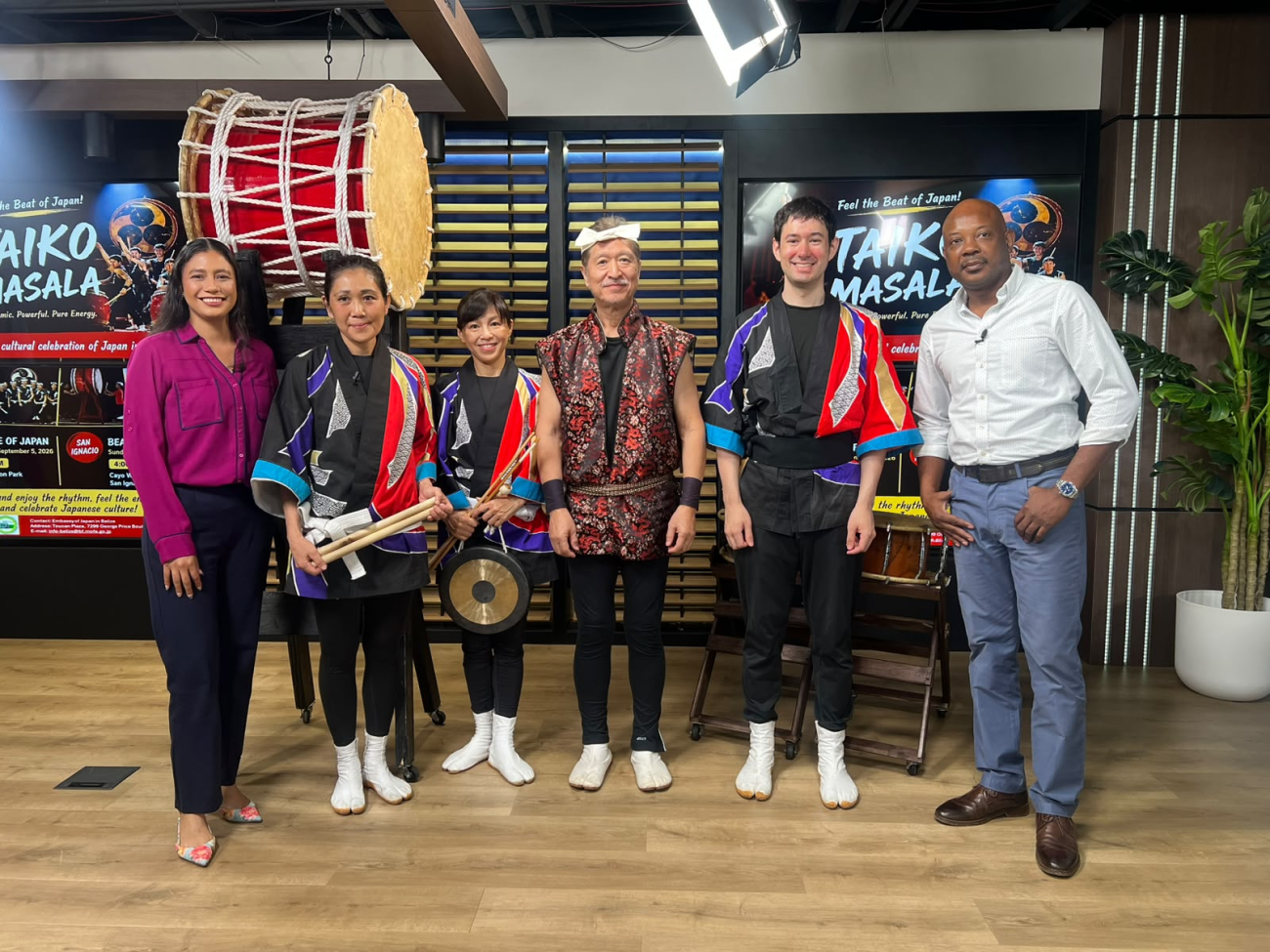
The powerful sound of Japanese taiko drums filled the Open Your Eyes studio as members of Taiko Masala shared the history and cultural significance behind the traditional art form.
Joining the show were Hiroyuki Kurashima, founder and master drummer of Taiko Masala, along with drummers Yumiko Ogawa, Yuka Minagi, and Thomas Kikuchi. The group demonstrated how taiko drumming connects centuries-old Japanese rituals with modern performance.
Kurashima explained that one of the pieces performed dates back roughly 1,000 years and was traditionally played at a shrine as part of a prayer ritual.
Drumming as a Message of Peace
While taiko began with strong spiritual and ceremonial roots, the art has evolved into a form of entertainment and cultural expression. For Taiko Masala, however, the message of the drums remains deeply connected to peace.
Kurashima said their mission is to share “the joy of peace” through their performances. The group sees music as a way to connect people across cultures, even when language may be a barrier.
The performers also described a spiritual connection between the drums, ancestors, and the gods of the land, expressing gratitude for being able to travel and perform safely.
Connecting Cultures Through Rhythm
Taiko Masala has spent approximately a decade performing throughout Central America, including Guatemala, Honduras, El Salvador, and now Belize, with support from the Embassy of Japan.
The group said their travels have allowed them not only to introduce audiences to Japanese traditions but also to recognize similarities between cultures.
The discussion drew comparisons between taiko and Belizean drumming traditions, particularly the use of drums to communicate with ancestors and the spiritual world. For the performers, rhythm provides a way to connect “from heart to heart,” even without sharing the same language.
Women Taking Their Place Behind the Drum
The performance also highlighted the growing role of women in taiko drumming. Yumiko Ogawa shared that women and men are increasingly treated equally within the tradition.
She explained that while some of the larger drums were traditionally played primarily by men, women now actively participate in performances.
Ogawa has been practicing taiko for 11 years and has also begun teaching others, noting that there is still much more for her to learn despite her years of experience.
More Than Just a Drum
The instruments themselves carry cultural and spiritual significance. Kurashima explained that traditionally, some drums were created from large trees associated with shrines. The wood was hollowed out and fitted with cowhide, with the belief that the drum could hold a connection to the divine.
For practitioners, playing the drum can therefore represent communication with ancestors and spiritual forces, adding a deeper dimension to each performance.
A 25th Anniversary Milestone
Taiko Masala’s visit to Belize included performances at the Welcome Center and in Belmopan, giving local audiences an opportunity to experience the traditional Japanese art form firsthand.
The group has now returned to New York, where they will continue preparing for a major milestone: Taiko Masala’s 25th anniversary concert in November.
Their visit offered Belizean audiences a rare opportunity to experience the power of taiko while discovering the cultural and spiritual traditions that continue to shape the art form today.