


Designed to Slip Through? Millions Paid Just Below the Threshold
A senior government official is sounding the alarm after News Five uncovered millions of dollars in public funds paid out through a trail of smaller invoices. Financial Secretary Joseph Waight is now questioning whether those payments, many just under the usual scrutiny threshold, were deliberately structured to fly under the radar. With growing attention on transactions linked to relatives of Minister Oscar Mira, the pressure is building. So, were these payments routine, or something more? News Five’s Paul Lopez breaks down Waight’s concerns and what they could mean.
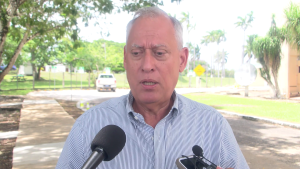
Joseph Waight
Joseph Waight, Financial Secretary
“In my view, I think what happened is somebody dropped a ball, fell asleep, or worse they moved together on it.”
Financial Secretary Joseph Waight spoke to the media on Tuesday in Belmopan, addressing tough questions sparked by News Five’s investigation into hundreds of government payments to relatives of Minister Oscar Mira. He pointed to a key detail, a ten-thousand-dollar threshold, where anything below it can be processed within a ministry, raising concerns about how those payments were handled.
Joseph Waight
“Each Ministry has what we call an accounting section manned by clerks, second first class, finance officers, and usually a clerk would prepare a Smart Stream Invoice, a payment and that is approved by a second person, and it goes through if it is below a certain threshold. In this case, the threshold is ten thousand dollars.”
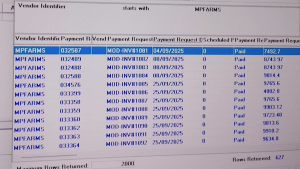
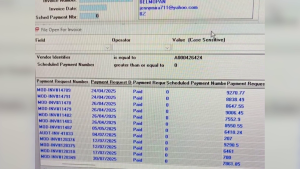 When an invoice exceeds ten thousand dollars, it requires further scrutiny from the Treasury Department. News Five found that ninety-seven percent of the invoices reviewed fell below ten thousand dollars and were processed in batches on the same day.
Joseph Waight
“If you see a whole lot of payments going through it should have raised an alarm, it should have raised an eyebrow, I think so. But you can split a payment into pieces, because imagine you get a payment every month, come to the end of the month you are dry.”
Paul Lopez
“But that is not what happened in this case. In this case those payments were made where all those invoices under ten thousand dollars were processed.”
Joseph Waight
“So what I was saying that was another possible explanation, but not in this case, this case looks cute to me.”
 Paul Lopez
“Is it a strategy employed to avoid going to that third step where you have to involve treasury?”
Paul Lopez
“It is possible. It looks as if there was some willful intention to dodge. I will wait to see what the audit says, but on the surface, it does not look correct.”
Waight says the approach used in the “Mira millions” payments is new to him.
Joseph Waight
“In the old days we use to have spot checks, treasury use to send out to a subtreasury to do surprise surveys, and we need to do that again.”
So, as Fin Sec Waight points out, the buck stops with the Financial Officer who signs off on the invoices and makes the payments.
Paul Lopez
“What has become of that financial officer?”
Joseph Waight
“Well we will wait to see what the audit reveals, to see if there is anything highly irregular, and we will take it from there. In the meantime, I think he is on leave.”
Paul Lopez
“Administrative leave?”
Joseph Waight
“But that is only for a short period of time, then voluntary leave. I don’t know.”
As the audit moves forward, Waight says its findings will decide whether this points to a system failure or deliberate manipulation and whether changes to the payment process are needed. Reporting for News Five, I am Paul Lopez.
Attention readers: This online newscast is a direct transcript of our evening television broadcast. When speakers use Kriol, we have carefully rendered their words using a standard spelling system.
Watch the full newscast here: