



Unsafe at Home: Two-Thirds of Belizean Children Face Abuse
What happens when the place a child should feel safest becomes the place they’re most at risk? In Belize, the answer is unsettling. New data from UNICEF’s MICS 7 survey shows that nearly two-thirds of children experience some form of abuse, whether it’s physical harm, emotional trauma, or neglect. But this story is about responsibility, not just about statistics. While Belize has a system designed to protect its youngest citizens, experts say real protection doesn’t begin in courtrooms or government offices. It starts at home. And when that first line of defense breaks down, it’s up to communities to step in and fill the gap. In this episode of Five Point Breakdown, in partnership with UNICEF, News Five’s Britney Gordon looks beyond the numbers, examining how Belize’s Child Protection System works, and what it takes to keep it standing.
 Britney Gordon, Reporting
Every child should feel safe at home, but too often in Belize, that’s not the reality. When that safety breaks down, a nationwide network steps in. Police, social workers, teachers, health workers, and the courts all play a role in protecting children and responding to abuse. But as UNICEF’s Child Protection Officer, Michelle Segura-McGann, points out, protection starts at home, with families as the first line of defense.
What is a child protection system?
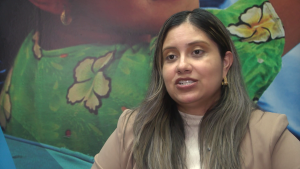
Michelle Segura-McGann
Michelle Segura-McGann, Child Protection Officer, UNICEF Belize
“If there is no protection or protective mechanisms in the home, the next network or safeguard could be the community. So the community could offer spaces where children can come report cases where they have been abused, neglected, where they have experienced violence, and people in the community could refer. And it’s important that they have the information that they need at hand, that they know the referral mechanism for child protection which is why it’s important for us to invest in campaigns like Blue Teddy Bear.”
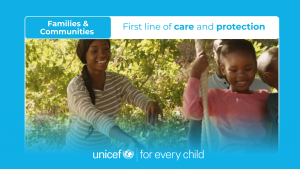 When community members turn a blind eye, or decide that something isn’t their business, that’s when children fall through the cracks. Shakira Sutherland, Executive Director of the National Commission for Families and Children, tells us more about this effort.
Who are the key players in a child protection system?
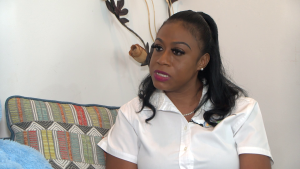
Shakira Sutherland
Shakira Sutherland, Executive Director, NCFC
“When a teacher, who is a mandatory reporter, will see some sign of abuse how do they react? When it comes to medical professions professionals looking at how, if there’s a concern, follow through with if there’s an issue or a report to the police. And we want to ensure that we have the community at large to speak up when they see something. And so looking at that trend, looking at reporting, looking at how we need the general public and reiterating that it’s not only one institution.”
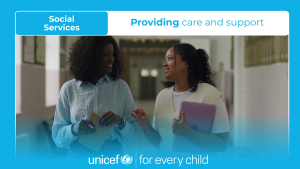 While everyone is working toward the same goal, each player brings a different role to the table. Social services, such as the Ministry of Human Services, provide ongoing care and support, while NGOs and community groups help fill gaps and reach vulnerable families.
Why do we need a system?
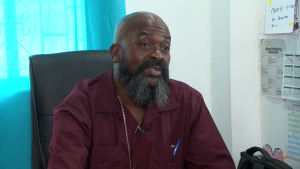
Shawn Vargas
Shawn Vargas, Director, Department of Human Services
“The children are the future for Belize, and if you have a country that is not protecting their children, the next generation and the other generation, then you’re going to be in problems. And so like you mentioned earlier, it goes beyond the abuse component. But looking at their level of participation, their level of inclusion, the children’s parliament is an eye-catching activity. And I really commend the NCFC for something to that effect because what comes out of the parliament, it’s actually looked at and then placed into policy, government policy.”
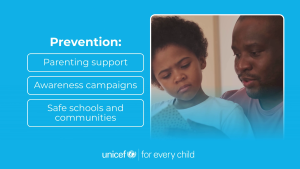
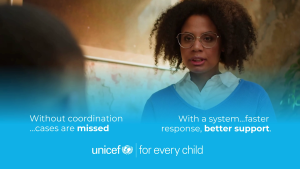 A strong system steps in before harm happens and moves fast when it does. At the Department of Human Services, Director Shawn Vargas says that effort is powered by multiple units, each playing a key role in protecting Belize’s children. The Community and Parent Empowerment Program focuses on prevention through early childhood education and parenting programs, while the Child Protection Unit handles abuse and neglect cases.
Prevention and Response elements of a child protection system
 Shawn Vargas
“We have a system of social workers, a referral systems, whether it comes from the schools, from the police department, from hospitals or from any person, and we do have mandatory reporters by law. And once a report is made, we pride ourself with one hundred percent of reports made to the department are investigated. Once a report is made, we have assigned social workers who are on the ground that go in to make follow-up on the, on the investigation, make follow-up on the referrals to ensure that what was reported is something that looks at the best interest of children and how do we go about providing the needs of the family or the child.”
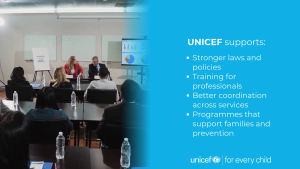 UNICEF helps power Belize’s child protection system by strengthening the structures that keep children safe and supported. The organization focuses on improving laws and legislation, training personnel, and ensuring systems are properly resourced and implemented. Sajid Ali, UNICEF Representative, says it works to build a proactive framework that prevents harm before it occurs, rather than reacting only after children are already at risk.
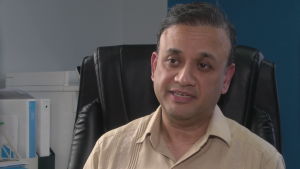
Sajid Ali
Sajid Ali, UNICEF Representative
“UNICEF is a convener. We are here to strengthen systems. We are not really implementers or trainers, but we do have technical expertise that we can call upon from time to time. But we do, in a way, try to work with the government of Belize also when it comes to resourcing the different implementation, I would say, activities of the system. So we don’t wanna be the real on-the-ground implementers. There are many agencies and then there are many other government players who can do that. But we wanna be there at least for the standards that are set and to be advising at every aspect.”
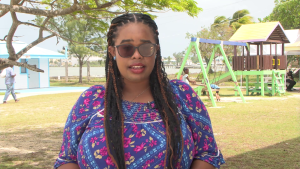
Britney Gordon
Britney Gordon
Belize is rethinking how it protects its children, with key players finally sitting at the same table. The Government of Belize, alongside UNICEF and national partners, is bringing together the people who shape how children are protected, kicking off a joint Child Protection and Child Justice Steering Committee. It’s a move aimed at cutting through silos and getting agencies to work in sync. From government ministries to child advocacy bodies and development partners, the goal is to build a more coordinated, responsive system that actually works for children. Because when it comes to protecting kids from abuse, neglect, and violence, collaboration isn’t optional, it’s critical.
Protecting children is everyone’s responsibility. When we work together, we build a safer Belize for every child. So do your part. And if you see something, say something. Britney Gordon for News Five.
Attention readers: This online newscast is a direct transcript of our evening television broadcast. When speakers use Kriol, we have carefully rendered their words using a standard spelling system.
Watch the full newscast here: