
331 Million Drug Users Worldwide, And the Market Is Evolving
One in sixteen people on the planet used an illegal drug in 2024, the global drug trade is becoming more sophisticated by leaning on technology, and new trafficking routes are outpacing governments’ responses.
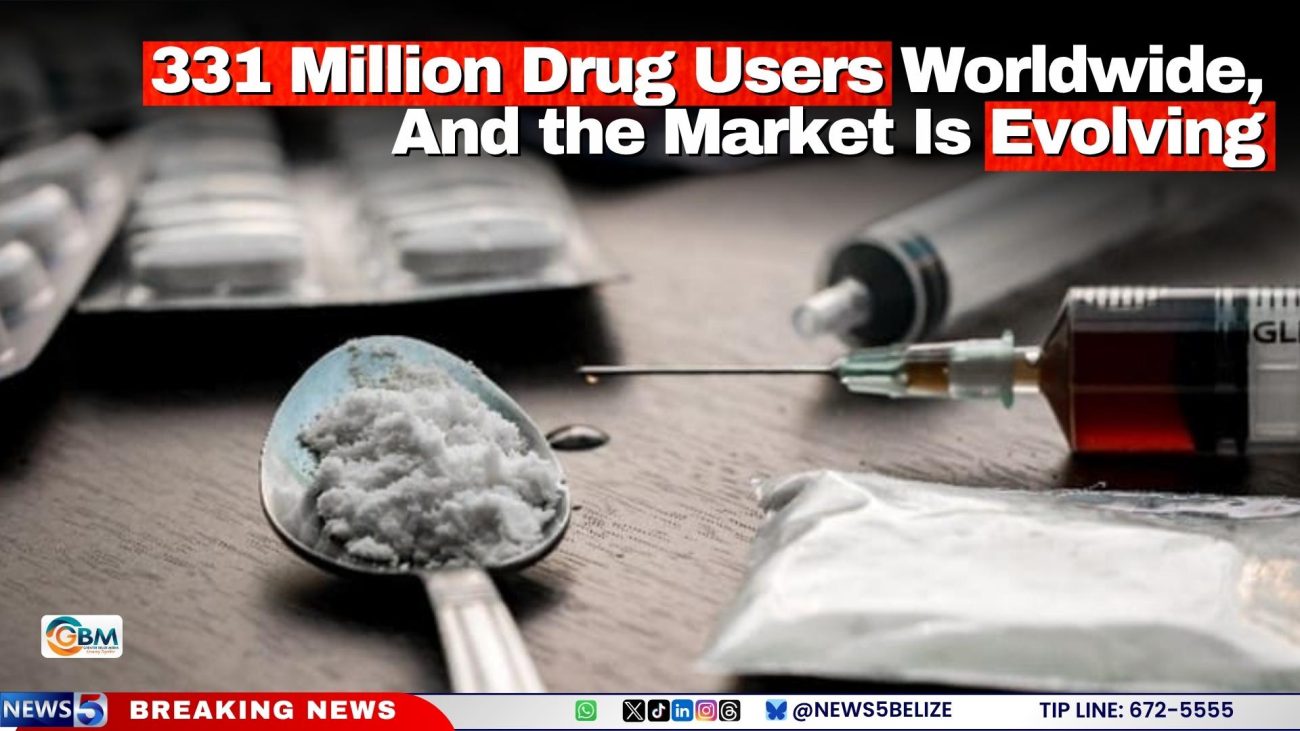
The United Nations Office on Drugs and Crime’s (UNODC) World Drug Report 2026 was released today. The 2024 data estimates that 331 million people used a drug, a 34% increase over the past decade. Cannabis remains the most widely used substance, with 256 million users globally, a 40% rise over ten years. Cocaine use has also grown by more than a third, with an estimated 25 million users worldwide.
“We have seen an unprecedented spike in new types of drugs on the market, and worryingly, some are more potent or dangerous than before,” said UNODC Executive Director Monica Juma. “Millions of premature deaths and healthy years of life needlessly lost. Drug trafficking networks are distorting economies. The imperative to focus on stopping organised crime groups has never been greater.”
The Innovation of the Global Drug War
The report paints a picture of a global drug trade that has reinvented itself. Five times more drug types were found in seizures in 2024 than before the year 2000, with 755 new psychoactive substances circulating in markets, 118 of them reported for the first time. Traffickers are constantly developing new synthetic drugs to skirt regulations and avoid detection.
Perhaps most striking is how traffickers are now using technology to reach customers. According to the report, 19% of Europeans surveyed in 2024 said they bought drugs on social media, exceeding purchases made on the dark web by 4%. This was observed particularly among young people.
However, there are also early signs of a countertrend in some high-income countries, where adolescents are showing a decline in cannabis, alcohol, and tobacco use and an increasing perception of cannabis as harmful, a significant reversal of long-term trends. The report attributes this shift to the wide range of new products and the growing popularity of vaping devices, but also to the pervasive use of social media, gaming, and less face-to-face contact with peers during the evening. This suggests that screen time may be quietly displacing some traditional drug use behaviours among young people.
Men and women affected differently
The report also points to a significant gender gap in drug use. Roughly three times more men than women use drugs globally. Men tend to start earlier and are more influenced by peer pressure and sensation-seeking.
Women, however, progress to dependence faster, a pattern researchers call the “telescoping effect”, and are more likely to begin using drugs as a form of self-medication for mental health issues or pain. Among women, ecstasy was the most commonly used drug, followed by amphetamines.
Where is Belize in the report?
The report places Belize within the Americas, a region that accounts for an estimated 105 million drug users. As trafficking routes evolve and criminal groups search for new markets, small countries are unlikely to remain insulated from those pressures.
“The imperative to focus on stopping organised crime groups has never been greater,” Juma said. “We must surge deterrence efforts, increase intelligence-sharing and coordinate joint operations.”
To fight the rapidly changing dynamics of the global drug war, the report calls for stronger deterrence, greater intelligence sharing, coordinated joint operations, and increased investment in prevention and treatment. Can law enforcement, public health systems and policymakers keep up?