


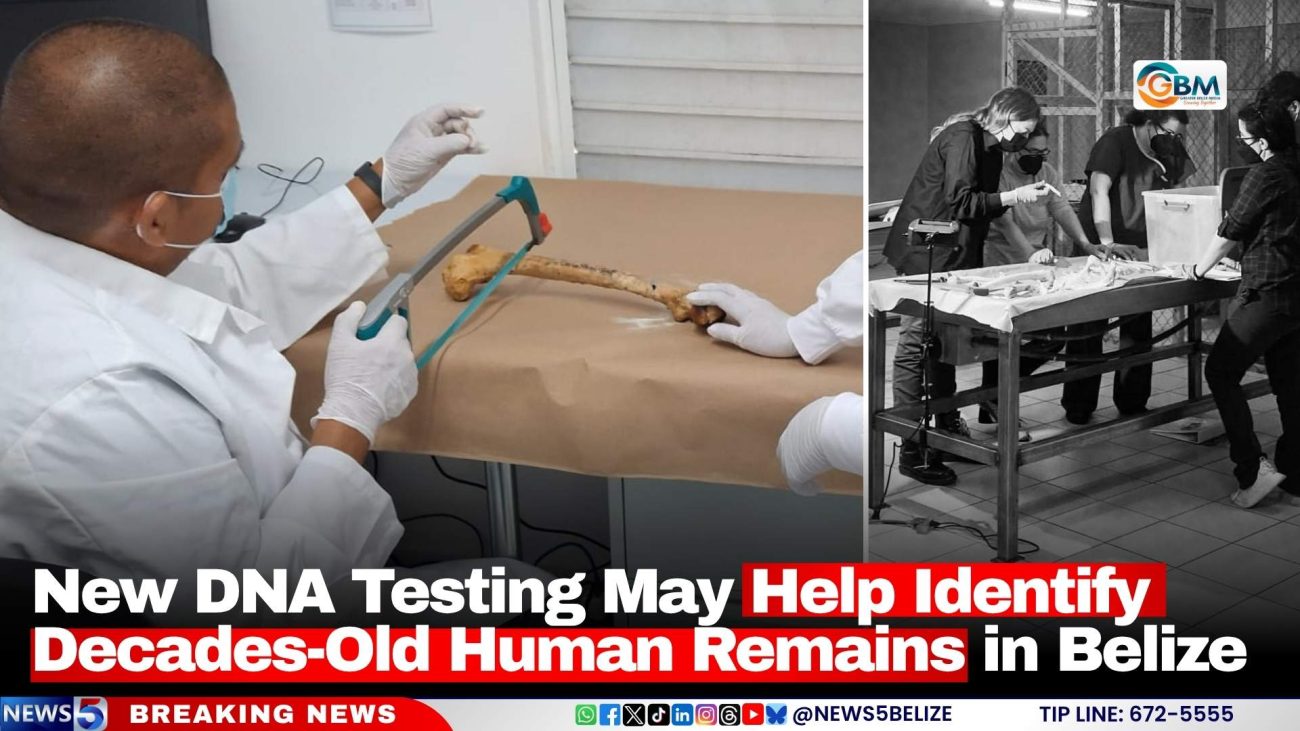
New DNA Testing May Help Identify Decades-Old Human Remains in Belize
Somewhere in Belize, skeletal remains dating as far back as 1998 have been sitting unidentified, belonging to someone whose family may still be waiting for an answer. The National Forensic Science Service (NFSS) is now attempting to give that person back their name.
The NFSS is collecting DNA samples from four sets of unidentified remains. Because the bones are too old for conventional methods like fingerprint analysis, scientists are using mitochondrial DNA testing, a technique powerful enough to extract genetic information even from severely degraded remains.
Executive Director Gian Cho said investigators are cross-referencing biological profiles of the remains against missing persons reports dating back to 2013, narrowing down candidates by sex, ancestry, estimated age, height, and signs of trauma. The agency’s standard DNA technology, which can solve recent cases in as little as two days, simply cannot handle remains this old.
“In 2013 we started to get more consistency in case files, in making sure that there are overlaps of information, in making sure that contextual information from the skeletal remains that were recovered sometimes a decade before could be preserved,” Cho said.
Families continue to wait for answers. Just last year, 38‑year‑old Mason Patnett disappeared from Vista Del Mar, and 77 days ago, call centre employee Deborah “Bree” Arthurs went missing on her way home to Belmopan. Their loved ones fear these cases may also become part of Belize’s growing list of cold cases.
“Not knowing where Mason is, every time we hear of a potential body or anything like that, we’re going to go through the same emotions every single time,” a family member told News 5 last January. “We just want to find him at this point.”